


Showing posts with label facebook. Show all posts
Showing posts with label facebook. Show all posts
George Bronk Used Facebook To Hack Women's Emails
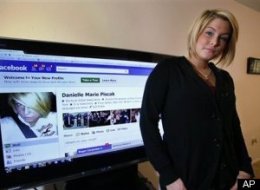
The California attorney general's office said Friday that George Bronk, 23, commandeered the e-mail accounts of dozens of women in the U.S. and England. He then scanned the women's "sent" folders for nude and seminude photos and videos, and forwarded any he found to all the women's contacts, prosecutors said.
Bronk coerced one woman into sending him more explicit photographs by threatening to distribute the pictures he already had. One victim told authorities the intrusion felt like "virtual rape."
Bronk, who lives in the Sacramento suburb of Citrus Heights, pleaded guilty Thursday to seven felonies in Sacramento County Superior Court, including computer intrusion, false impersonation and possession of child pornography.
Prosecutors are seeking a six-year prison term when Bronk returns for a sentencing evaluation March 10.
His attorney, Monica Lynch of Roseville, called her client a "23-year-old boy going on 15."
"He's accepted full responsibility. It's a tragic situation," she said.
Lynch said she will argue for less than a six-year sentence.
Prosecutors said Bronk would scan women's Facebook accounts looking for those who posted their e-mail addresses. He would then study their Facebook postings to learn the answers to common security questions like their favorite color or father's middle name.
He contacted the women's e-mail providers and used the information to gain control of their accounts. He also often gained control of their Facebook accounts by hijacking their passwords, then posted compromising photographs on their Facebook pages and other Internet sites.
"This case highlights the fact that anyone with an e-mail account is vulnerable to identity theft," Attorney General Kamala Harris said in a statement announcing Bronk's guilty plea.
Investigators found 172 e-mail files containing explicit photographs of women when they searched Bronk's computer in September, according to a court affidavit. They were able to track his victims to England, Washington, D.C., and 17 states: Alabama, Arizona, California, Georgia, Illinois, Iowa, Kansas, Louisiana, Massachusetts, New Hampshire, New Jersey, New York, Ohio, Oregon, Texas, Virginia and Washington.
"He is a sick individual," said 22-year-old Danielle Piscak of Parkland, Wash., one of Bronk's victims.
Piscak said one of her friends alerted her that nude photographs she had sent privately to her husband were posted on her Facebook page last fall. Facebook removed the photos the next day.
"I have a network of like 1,500 people, so they all saw my pictures. So my graduating class of 2007 saw that. I'm in the military, so all my army friends saw that," Piscak said. She had to explain the embarrassing situation to her family and husband, from whom she is separated.
Piscak used a different e-mail account to contact the person who had hacked her page.
"I said, 'Why are you doing this?' and he said, 'Because it's funny,'" Piscak said in a telephone interview. The Associated Press does not identify victims in sex cases as a matter of policy, but Piscak gave permission for her name to be used. She also said she has agreed to tell her story on a nationally televised talk show.
Piscak said she fears the postings could harm her future in the military and her plans for a career in criminal justice, though most people who saw the photos were understanding.
A second victim, Stephanie, 24, of Los Angeles, said she, the FBI and other authorities tried for seven hours to remove an album of 10 photographs that Bronk posted on her account before Facebook took it down.
"Then he wrote just crass, racist, disgusting comments on people's walls that I was friends with," said Stephanie, who did not want her last name used for fear the story could harm her career. She said she felt violated, "kind of a rape-like situation."
Stephanie said she originally had sent the private photos to a boyfriend, only to have them seen by her college professors and co-workers.
Both of the victims, along with Bronk's attorney, said Facebook should have caught Bronk's activities more quickly. Facebook spokesmen did not return telephone or e-mail messages Friday.
Bronk began his hacking in December 2009, prosecutors said. He will have to register as a sex offender because of his guilty plea.
Investigators caught on after a victim called Connecticut State Police, which referred the complaint to the California Highway Patrol. They used information from Bronk's confiscated computer to e-mail questionnaires to 3,200 of his Internet contacts, asking if they had been victimized.
Forty-six women said they had. Bronk was arrested in October and remains jailed on $500,000 bond.
The attorney general's office advised those using e-mail and social-networking sites to pick security questions and answers that aren't posted on public sites, or to add numbers or other characters to common security answers. Additional safety tips are on the California attorney general's website.
1:45 AM 0
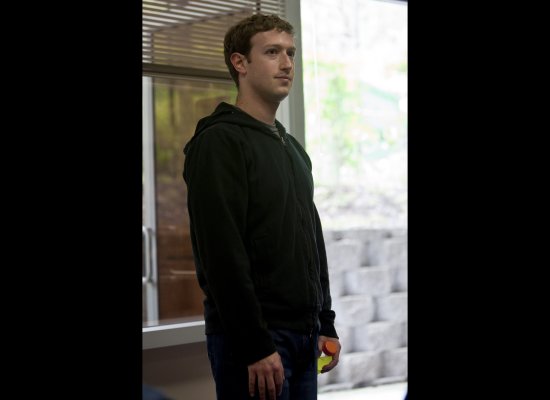
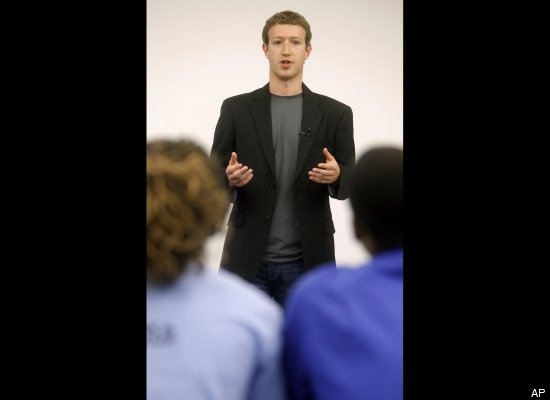
Mark Zuckerberg Named One Of 2010's Worst Dressed Celebrities
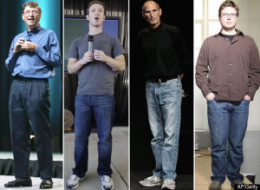
So which techie was awarded this dubious distinction? None other than TIME magazine's "Person of the Year," the founder and CEO of Facebook, Mark Zuckerberg.
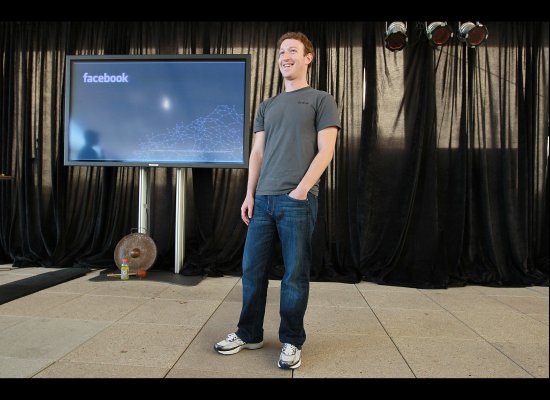
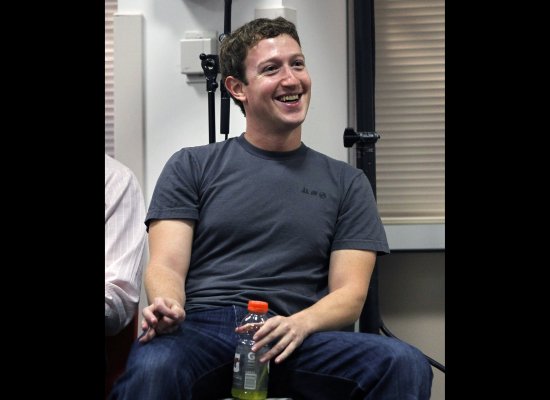
Despite Zuck's status as one of the richest techies in America, he's never been one to flaunt his wealth. He has publicly stated that he rents his Palo Alto home and he is known for giving press conferences in sneakers, jeans and a T-shirt (à la Steve Jobs).
Perhaps hoping to keep him off next year's list, Esquire offered Zuckerberg some wardrobe advice:
[N]o matter how much money you have or how many people's secrets you hold in your digital palm, you cannot show up to a black-tie event in a t-shirt and jeans and expect to be taken seriously. [...] You just gave a hundred million to Newark's schools. Would it kill you to throw a couple thousand to, say, Zegna for a couple of nice suits?
To view a sample of Zuck's infamous threads, check out the slideshow (below). Then, check out Esquire's complete 2010 Celebrity Style Hall of Shame, which includes other questionable dressers, such as Robert Pattinson, Russell Brand and Rush Limbaugh. And take a look through our slideshow of Steve Jobs's uber-casual business attire and how his signature style has evolved over the years.
4:46 PM 0
Farm Bureau finds wealthy friend in Facebook

Facebook paid $8.5 million to acquire the Internet address ‘fb.com’ for internal use by its employees from the largest U.S. farm group.
Facebook founder Mark Zuckerberg announced the purchase on Nov. 15, when Facebook unveiled its new messaging service. But he didn’t reveal the pricetag.
“The Farm Bureau agreed to sell us fb.com and we in return have agreed not to sell farm subsidies,” Zuckerberg said in an account on techcrunch.com.
At their annual meeting in Atlanta, Farm Bureau officials on Tuesday said the organization earned $8.5 million by selling a couple of domain names but is barred from identifying the buyer. The farm group uses fb.org as its Internet address but may own four dozen domain names related to farming.
Photo credit: Reuters/Robert Galbraith (Facebook CEO Mark Zuckerberg at company headquarters Aug. 18, 2010)
2:08 AM 0
Ten Reasons Facebook May Not Be Worth $50 Billion
2. Private valuations are opinion, not science. A few years ago, the Winklevoss twins used Microsoft's $15 billion valuation to settle their lawsuit. Meanwhile, Facebook's board appraised the company at $3.7 billion. Is there more than one valuation in 2011?
3. Goldman Sachs takes care of Goldman Sachs. Is the $50 billion valuation "God's work" or more engineering from the organization that brought us the Abacus fiasco?
4. At 100x on earnings this multiple is lost in space. Danger, Will Robinson.
5. Growth drive high multiples, but measurements are far from perfect. Here's what Inside Facebook writes about Quantcast, a firm that tracks Facebook's stats:
In what appears to have been an unannounced recalculation, the firm is now showing Facebook 129 million monthly unique visitors. That's the most it has ever tracked, according to the site today. But when we looked last month, Quantcast was showing Facebook had plateaued at 137 million monthly uniques. Apparently there was some sort of methodology change.6. IPO hurry-up strategy -- prime the pump and sell the hype. Facebook's US traffic during November fell from 133.5 million monthly visitors to 132.7 million. Growth is coming from overseas, but there is no certainty that international revenues will keep pace with those in the US. Is the $50 billion valuation step one of a carefully orchestrated strategy to go public -- just in case ad income plateaus sooner than expected?
7. Goldman makes money even when others don't. Its fees from this deal total $160 million. Its take from a Facebook IPO could be just as big. So how much of the bank's $450 million investment is really at risk?
8. Smells bad. In order to participate, high-net investors must agree to 4 percent front-end fees, lock-ups on their stock, and zero transparency. I was a HNW stockbroker. I've seen this movie before, and the client gets screwed.
9. At 25x earnings, the Google comp argues for a much lower multiple. What was that about a 100x multiple?
10. Caveat emptor striga Architeuthis dux. That's Latin, more or less, for "buyer beware of great vampire squid."
5:07 AM 0
Facebook likely to go public in 2012
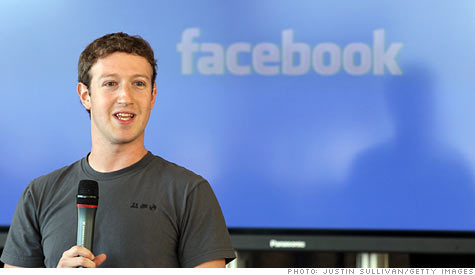
NEW YORK (CNNMoney) -- Facebook's days as a secretive and private company are numbered: By early 2012, the social networking giant is poised to either hold an initial public offering or begin disclosing its financial results.
Goldman Sachs is in the process of distributing deal information to wealthy clients interested in joining a Facebook investment pool it is creating. In that deal memo, Facebook says that it intends to pass a key 500-shareholder mark this year, according to a report in the Wall Street Journal.
Facebook did not immediately respond to a request for comment.
When companies have more than 500 shareholders, they're required to make significant financial disclosures -- though they can choose to remain private and keep their stock from trading publicly. However, most companies facing mandatory disclosures opt to go public.
The Securities and Exchange Commission gives businesses lots of time to prepare for that milestone. Companies have until 120 days after the end of the fiscal year in which they cross the 500-shareholder line to begin making their disclosures. If Facebook tips the scale this year, that gives it until April 2012 to start filing financial reports.
Facebook's IPO plans have long been a subject of intense Silicon Valley speculation, but the issue heated up this week after the New York Times reported on a Goldman Sachs investment that values the six-year-old company at a staggering $50 billion. That's up sharply from the $15 billion valuation Facebook sported three years ago, when Microsoft shelled out $240 million for a 1.6% stake in the venture.
Going public can be painful for hotshot tech companies, which still struggle with the aftershocks of the dot-com implosion. Being public subjects them to significant regulatory requirements -- and to the mercurial tempers of Wall Street analysts and investors. As a result, many of the industry's emerging stars have tried to hold off on their public debuts.
But as companies give away equity to employees and venture capitalists, staying below the 500-shareholder limit becomes a constant challenge. Private investors vie to snap up shares from early stakeholders in private deals and, increasingly, in secondary-market exchanges that operate like public markets. Those secondary exchanges are restricted to accredited investors with assets of at least $1 million -- a safeguard intended to prevent mom-and-pop investors from sinking their cash into risky ventures.
Facebook has gone to great lengths to avoid being forced into public disclosure. By 2008, it had stopped issuing employees stock options and instead gave them "restricted stock units" that would only have value if the company went public or got bought. Those units cannot be sold or traded, and the SEC agreed that those who hold them would not count toward the 500-shareholder limit.
But early staffers and investors own Facebook shares they can sell, and they've been actively unloading them on private exchanges.
Other hot startups, including Twitter, Zynga and LinkedIn, also draw strong interest from private investors, but Facebook is by far the most actively traded company, according to executives from the two most-active exchanges, SecondMarket and Sharespost.
4:23 AM 0
Report: Facebook Revenue Was $777 Million In 2009, Net Income $200 Million

DST and Goldman Sachs’ $500 million investment in Facebook has obviously stirred up the tech and financial journalism pot and all sorts of amazing information is now coming to light regarding the social network’s financials. On this note the WSJ is reporting that Goldman is now offering potential investors a Facebook “snapshot” which outlines site traffic, ad statistics and other analytics.
Additional details about 2009 revenue were also revealed during the Goldman solicitation process. From the WSJ:
“According to people familiar with the document, Facebook had net income of $200 million in 2009 on revenue of $777 million. Figures for 2010 weren’t disclosed, but analysts have said the company’s revenue last year could be as much as $2 billion, fueled by advertising growth.”The unofficial “guess Facebook’s revenue” game has been going on for a long time, but we have to say Inside Facebook came the closest for 2009, pinning it at around 700 million back in March. Their estimated breakdown below.

1:51 AM 0
$1 Billion Isn’t Cool. You Know What’s Cool? $50 Billion. Goldman And Facebook Agree.

More specifically, Goldman has invested $450 million in Facebook while Russian firm (and current large stakeholder) Digital Sky Technologies threw in another $50 million for a total of $500 million in this round. But the round is more complicated than that as apparently Goldman will be able to unload some of its stake to DST, according to the report.
So is the IPO a done deal? Not exactly. While Facebook itself hasn’t given a timetable for the milestone, many were expecting it to happen in 2011. But more recent indications suggest it will more likely occur in 2012. Facebook, obviously, wants it to happen as late as possible so they don’t have shareholder to answer to. But that’s the thing; with all the investment they’ve taken, and the red-hot activity on the secondary markets, they already do have a lot of shareholders — they just don’t technically have to answer to them.
Yet.
The SEC is said to be looking into whether or not that Facebook is improperly skirting around the rules for going public.
Either way, Goldman looks to make a a good chunk of change before the IPO as well. From the report:
In a rare move, Goldman is planning to create a “special purpose vehicle” to allow its high-net worth clients to invest in Facebook, these people said. While the S.E.C. requires companies with more than 499 investors to disclose their financial results to the public, Goldman’s proposed special purpose vehicle may be able get around such a rule because it would be managed by Goldman and considered just one investor, even though it could conceivably be pooling investments from thousands of clients.If that doesn’t piss the SEC off too much, that is huge for the firm. They’ll get fees for all of that. But not drawing the further SEC attention will be hard given that Goldman is said to be trying to raise up to $1.5 billion for Facebook from investors at that $50 billion valuation.
Remember that it was barely a month ago when we reported on Accel Partners selling off a big portion of their Facebook stock at a $35 billion valuation. Of course, they made something like a 247x return on that sale, so it’s hard to argue with it. A few weeks later, we noted that Facebook had hit the $50 billion mark in valuation on the secondary markets. With this investment, that valuation has just been validated.
As if The Social Network needed any more buzz leading up to its DVD release next week… Oh and here’s a little something Facebook could use some of the money on.
12:28 AM 0
Facebook Tops Google As Most Visited Website Of The Year
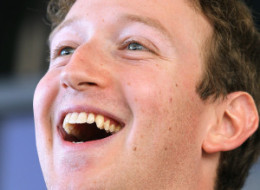
In addition to being named TIME's Person of the Year and seeing the social network he founded swell to over 550 million members, he can also toast a major triumph over Google: for the first time ever, Facebook topped the list as the most-visited website of the year, ahead of giants like Google, Yahoo, YouTube, and Msn.com.
According to data from Hitwise, which provides online competitive intelligence, Facebook "accounted for 8.93 percent of all U.S. visits between January and November 2010."
Google.com made up 7.19 percent of visits and Yahoo! Mail ranked third with 3.52 percent of visits. Yahoo! claimed 3.30 percent of visits, and YouTube 2.65 percent.
Facebook has soared in the rankings as its share of visits has more than doubled in the past year. In 2009, it was the third most-visited site, behind Google and Yahoo! Mail, with 4.26 percent of visits. In 2008 it ranked ninth on Hitwise's list, trailing Google, MySpace, and eBay.
In an odd twist, Google is actually helping to fuel its competitor's rise by sending search traffic to the social network's site: For the second year in a row, "Facebook" was the top search term of 2010. In second place was "Facebook login," with "Facebook.com" and "www.facebook.com" also cracking the list of top 10 most popular queries.
While visits to Facebook have overtaken hits to Google.com, Google-owned properties--which include web video giant YouTube--actually received a greater share of visits, accounting for 9.85 percent of all U.S. visits. TechCrunch observed that Comscore confirmed Hitwise's findings: "Comscore also shows Facebook.com passing Google.com in visits in November but all Google sites as still having more."
The top websites commanded an ever-greater share of web traffic Hitwise noted in its report. "The top 10 Websites accounted for 33 percent of all U.S. visits between January and November 2010, an increase of 12 percent versus 2009," Hitwise wrote.
6:55 PM 0
Will Facebook Follow Zuckerberg To China? Inevitably

But were these get-togethers a precursor to something bigger, a negotiated entry into the China marketplace? Will Facebook eventually play nice with the Chinese government, ushering in an era of a censored China Facebook? My guess: Yes.
Some observers of Zuckerberg’s China-capades have suggested his visit to tech companies mean nothing, that his trip here is strictly personal. I think they’re wrong. You can sense Zuckerberg’s thirst for the Chinese market in his public comments before the trip, and now he has held meetings with the industry leaders who can provide helpful insights on how to tap that market. No, this trip is not just about the girlfriend and in-laws.
Meeting people like Li, Wang, Chao and Ma is smart because entering China will be tricky: Launching “Facebook.cn” would require deft maneuvering with the Chinese government, of course, and has the potential to be a public and customer relations nightmare that could dwarf the problems Google had in its attempt to host a China-based search engine. We know how that ended, but more important, the execs Zuckerberg has met with all will have some ideas on how to navigate these issues.
Commentators have had a field day speculating about Zuckerberg’s field trip, including my colleague Oliver Chiang, who followed the China vacation from the quirky planning stages to his latest stop, and who noted that one Baidu executive, at least, has spoken up on his own in favor of a China entry for Facebook. Blogger Bill Bishop cheekily suggests another option, that Facebook offer Chinese Internet users a way around the Great Firewall to use the service, which has been blocked since just after the Xinjiang riots of 2009 (less controversially, Bishop also suggests Zuckerberg could win some Chinese fans by proposing to his girlfriend on the Great Wall of China, instead of breaching the Great Firewall). China’s Global Times, meanwhile, dismissed Facebook’s potential in an opinion piece yesterday under the headline, “China not an easy market for Facebook.”
The best-argued case against a China entry that I have seen was laid out yesterday by Kai Lukoff, co-founder of techrice.com, in his post, “Why Mark Zuckerberg Came To China and Why Facebook Will Not.” Lukoff writes:
I see no implementation of “Facebook China” that could appease the government without infuriating Western/international users and/or jeopardizing its global interconnectedness (which would also be its competitive advantage in China). Questions to consider:How about that — a privacy problem that would rival, well, Facebook’s existing privacy concerns. Privacy issues in China can have a more ominous edge to them, as we saw in the case of Shi Tao, a journalist who was sentenced to 10 years in prison based in part on identifying evidence that Chinese authorities demanded — and received — from Yahoo. Then again, Facebook is a real-name business, not a place for dissidents to go into hiding.
- Who would “Facebook China” censor and who not?
- How would Facebook wall off the accounts of young Chinese who study overseas, set up accounts, and return to China?
- Would Facebook stop current news, like Nobel winner Liu Xiaobo, from spreading and trending?
- Would it turn over the personal details tied to accounts?
There is at least one other related issue, in light of the WikiLeaks suggestion that Chinese leaders authorized hacking intrusions into Google: the likelihood of Chinese hack attempts on Facebook would seem to increase if the company added on millions of mainland Chinese users (many of whom currently use Chinese social networking sites). Sure, some Chinese leaders have always distrusted Google, but Facebook, on which people can connect and spread information quickly and organize — that makes the system a little more nervous. Beijing has enough headaches with its homegrown Web 2.0 services like Sina’s Twitter-like Weibo, on which New York Times columnist Nick Kristof made a brief appearance yesterday to prove that China censors its Internet, a “victory” that would seem to define the word “pyrrhic.”
But Zuckerberg has already answered the question of whether Facebook will go to China with a question of his own: “How can you connect the whole world if you leave out 1.6 billion people?” That powerful notion — connecting the whole world — is what will trump arguments against a Facebook entry into China even in the eyes of many Western users.
It is easy to overestimate the impact of any outcry by Western or international critics when it comes to China; more important, one should not underestimate the rest of the world’s willingness to accept compromises in connecting with China. Zuckerberg’s question also defines his terms of business in a way that differs importantly from Google’s existential China crisis: Facebook is not, first and foremost, about the free flow of information; it is about connecting people.
Will there be blowback, outrage and constant discussion of the impact of censorship on Facebook in China? Of course. Will much of that venting take place on Facebook? Most likely. Let a hundred Facebook groups bloom; Zuckerberg will welcome them. If the viral campaign against you is taking place on your platform, you’re in good shape.
At the same time, Zuckerberg will open his gated community to a customer base of Internet users that numbers more than the entire U.S. population. Virtually all companies, even Google for four years, have succumbed to the temptations of the Chinese market. It would be foolish to think Facebook won’t succumb one day, too.
4:11 PM 0
Peter Thiel, Facebook, PayPal Tycoon, Embraces Sci-Fi Future
Reality is a little more rumpled.
On a recent December night, Thiel walked, slightly stooped, across a San Francisco stage to make a pitch to an invitation-only audience of Silicon Valley luminaries – investors and innovators who had scored sometimes huge fortunes through a mix of skill, vision and risk-taking.
The billionaire PayPal co-founder didn't tell them about the next big startup. He wanted them to buy into a bigger idea: the future.
A future when computers will communicate directly with the human brain. Seafaring pioneers will found new floating nations in the middle of the ocean. Science will conquer aging, and death will become a curable disease.
If anything can transform these wild dreams into plausible realities, he believes it is the entrepreneurs of Silicon Valley – the minds and money that have conjured the technological marvels that have already altered everyday life.
"Do we try to pursue ideas that are weird and have optimism about the future, or do we give up on all new things and compromise?"
Sitting before him in the audience, among others: Facebook co-founder Dustin Moskovitz, Yelp co-founder and CEO Jeremy Stoppelman and technology publishing guru Tim O'Reilly.
As venture capital in Silicon Valley chases the next big mobile app or group discount service, Thiel was asking for them to fund technological breakthroughs that some believe in fervently and others see as sheer fantasy.
He even has a name for it: Breakthrough philanthropy.
Instead of just giving to help the less fortunate here and now, Thiel encouraged his fellow moguls to put their money toward seemingly far-fetched ventures that he believes could improve the lives of everyone for good.
Gathered on the stage were eight groups that Thiel thinks are on the right path.
One was the Singularity Institute, whose members believe in the near-inevitability of the arrival within the next century of computers smarter than the humans who created them.
The institute works to ensure that self-programming machines will create a world that looks more like Star Trek, less like the Terminator.
Another was the SENS Foundation, a group of biomedical researchers seeking a path to radical life extension based on the controversial aging theories of computer scientist-turned-gerontologist Aubrey de Grey.
And the Seasteading Institute, led by Patri Friedman, the grandson of famed economist Milton Friedman. It looks to establish distant ocean colonies to serve as laboratories for experimenting with new forms of government or "startup countries."
"As innovators, you are the best at finding and nurturing the right big ideas that can change the world," Friedman told the audience.
The history of Silicon Valley is filled with such ideas. The smartphone, the Web, the search engine, the personal computer itself – these all seemed far-fetched until they became commonplace.
To raise money from the wealthy, it's a time-honored strategy to flatter. Witness the names emblazoned across hospital wings and university buildings. But building important buildings has never seemed to especially interest Silicon Valley's elite.
They have "the right kind of cultural DNA to at the very least pay attention," said Greg Biggers, a longtime software executive who recently founded a startup, Genomera, that lets members conduct health studies using their own genetic data.
Biggers said Silicon Valley entrepreneurs would likely be receptive to Thiel's unconventional message because they succeeded by not conforming to others' expectations of what was possible.
"This is a roomful of people who bucked the system," he said as he mingled, glass of wine in hand.
Charles Rubin, a Duquesne University political science professor and blogger who has written critically about some of the movements endorsed by Thiel, said these visions of the future align closely with the Silicon Valley outlook.
All share the view that "scientific knowledge and technical capacity will continue to increase at an accelerating rate," Rubin said. "This is a core idea that practically defines what Silicon Valley is all about: ceaseless innovation."
Thiel himself seems to thrive on flouting convention, sometimes in ways that have led to harsh criticism.
In September, he announced a program designed to discover the next Mark Zuckerberg, Facebook's founder, by paying $100,000 each to 20 young people under 20 years old to skip college for two years to learn about entrepreneurship.
Jacob Weisberg, editor of the online magazine Slate, excoriated Thiel for the program and what he sees as its underlying impetus.
"Thiel's philosophy demands attention not because it is original or interesting in any way – it's puerile libertarianism, infused with futurist fantasy – but because it epitomizes an ugly side of Silicon Valley's politics," Weisberg wrote.
Thiel is not a traditional conservative – he has donated to Republican candidates but also to California's marijuana legalization ballot measure. But he does seem to believe in a trickle-down theory of technology.
Unlike the Bill and Melinda Gates Foundation, which has poured billions into providing basic health care for some of the world's most impoverished people, Thiel said he wants to prioritize major scientific advances he thinks will spread to benefit humanity as a whole.
His faith appears grounded in a pervasive Silicon Valley belief that motivates gifted individuals to achieve on a grand scale, no matter the apparent hurdles – death included.
But even Thiel admitted he has no idea how long that last obstacle will take to overcome.
"I would like to say that I would still be doing this even if I thought there was no chance I would benefit from this in any way," he said in an interview. "I think we have to work on these things even if they take centuries."
1:26 AM 0
Mark Zuckerberg's philanthropy is reason enough to applaud him
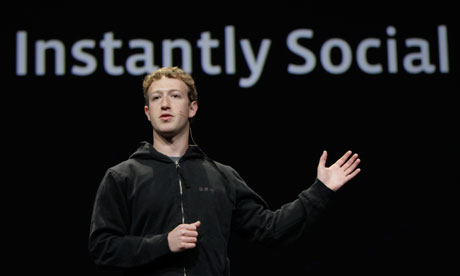
These days, Mark Zuckerberg, the 26-year-old face of Facebook, is everywhere. He's the subject of a glowing CBS 60 Minutes profile. He's Time magazine's 2010 person of the year. And his celluloid doppelganger sits at the centre of The Social Network, Aaron Sorkin and David Fincher's Facebook-creation-story-turned-awards-magnet.
Whenever the talk turns to Zuckerberg, numbers keeps popping up: 550m (the number of Facebook users worldwide); 26 (his age); 35 (his position on the Forbes list of wealthiest Americans); 6.9bn (dollars; his estimated net worth).
But the number that captured my attention – and admiration – is 100m (again dollars; the amount he decided to donate to the public school system in Newark, New Jersey, a place he's never lived).
No sooner was the donation announced than the long knives of the American media were unsheathed. According to the naysayers, the Facebook CEO was making the donation to counteract the negative depiction of him in The Social Network as, in the words of the New York Post, "a conniving backstabber who may have stolen the idea for his social networking site".
Or he was making it "as a way to ward off any negative stigma" arising from his standing on the Forbes 400. New York magazine called it "the PR move of the month". Even the Wall Street Journal, which called the donation "generous, courageous, and inspiring", said: "Mr Zuckerberg may be young. But he already has learned a lot about the offsetting PR value of philanthropy."
So the $100m donation to Newark's crumbling public schools was not, in and of itself, the story? The story is figuring out the motivation behind it? Is this what we have come to?
I really don't care why Mark Zuckerberg is donating $100m of his own money that will make a profound difference to the lives of Newark's children. I care very much that it's being done – that one of America's worst school systems will be getting a massive infusion of funds.
The problems the world is facing are enormous. But so is the amount of available money, energy, creativity, caring and dedication to making things better. Zuckerberg's donation is an example of the kind of big, bold steps that are needed in these troubled times.
Mark Zuckerberg's example demonstrates that we all need to bring a sense of urgency to the problems we are facing – and make ourselves part of the solution.
7:28 AM 0
Facebook 'Who Has Deleted Ya' Scam Promises Free iPhone, iPad
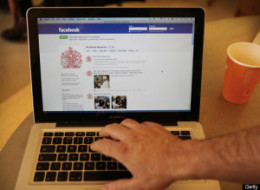
The post is part of a self-replicating spam attack that posts itself to all your friends' walls when you click on it and links to a scam website. AllFacebook reported the spam attack on Sunday.
The bogus post includes a fake message that reads, "i cant believe how many people av removed me from your friends list! well i kno who you all r now, & im coming 2 get ya!"
Clicking on the "Who Has Deleted Ya" link will redirect you to a site that promises a free iPhone 4 and iPad if you complete a survey. "[The survey] earns the spammer a commission, and only at the very end does the site clarify that you're entered into a drawing for an iPhone 4 and iPad, not necessarily an actual winner," AllFacebook warns.
View a screenshot of the spam post (below).
LOOK: [via AllFacebook, hat tip Switched]

4:48 AM 0
Facebook Plans Plunge Into The E-Commerce Fray
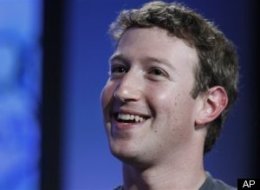
That's what the social media giant Facebook is asking, according to a Businessweek report that says the company intends to make a big push for e-commerce in 2011.
Though a few sites, such as J.C. Penney and 1-800 Flowers, have already linked up their products to a Facebook-powered electronic storefront, the company plans for extensive expansion in the new year.
Managers at Facebook have met with over 20 companies, according to David Fisch, who heads a new commerce partnerships group at the company. Facebook is working to help companies set up their shops directly on the site, and to take advantage of the interactive tools that the social network allows.
Facebook already has a site-specific system of monetary exchange, called Facebook Credits, which currently lets users buy virtual currency with real currency for use in games and apps. Fisch says, however, Credits will not be used to buy real products.
Nor does Facebook plan to make money off the retail sites they host. Instead, the move is part of the effort to keep users on the site for longer, boosting advertising revenue.
With over 500 million active users, with over 50% checking in at least once a day, Facebook's access to the social network is unparalleled. Those users spend over 700 billion minutes each month logged in.
Though Facebook is not yet the first site anyone thinks of when they think of online shopping, the social referencing mechanisms inherent to the site make the idea seem fully intuitive. A recent study found that 60% of Facebook fans of brands are more likely to recommend those brands since becoming a fan, with 51% of more likely to buy from the brands.
Even e-commerce behemoths like Amazon and E-Bay have linked their sites with Facebook's in the attempt to harness the social connectivity amassed there. And the Facebook Open Graph, which compiles a user's likes to personalize their web experience, may threaten Amazon's long-standing system of personalized recommendations. One analyst predicted that in five years, 15 percent of all consumer spending in developed countries could go through a site like Facebook.
4:42 AM 0
Mark Zuckerberg's China Visit Kicks Off
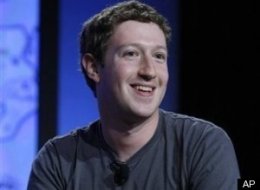
Photos of Zuckerberg's visit to Baidu Inc. were quickly posted online.
"Obviously I'm not going to deny what's in the pictures," Kaiser Kuo, Baidu's director of international communications, told The Associated Press by telephone. Zuckerberg had lunch with Baidu CEO Robin Li, Kuo said, adding that he didn't know what they talked about. He said the two had met before.
Not many in China are familiar with Facebook, but Zuckerberg is known for being Time magazine's 2010 Person of the Year, according to Kuo.
China censors Internet content it deems politically sensitive and blocks many websites, including Facebook, Twitter and YouTube. But curiosity has been high about Zuckerberg's visit to China and any possible business angles.
Zuckerberg has expressed a business interest in China, saying during a speaking engagement in October, "How can you connect the whole world if you leave out 1.6 billion people?"
Facebook watchers have also noted the travel-related questions he posted recently about China.
"Mark has had a long personal interest in China," Kuo said, pointing out Zuckerberg's efforts to learn Mandarin.
Zuckerberg is traveling with his girlfriend, Priscilla Chan, and no apparent entourage.
Aside from a visit Monday morning to a Tibetan temple in Beijing, the rest of his schedule in China is not known.
5:56 AM 0
The 15 Best Places To Work In America: GlassDoor.com (PHOTOS)
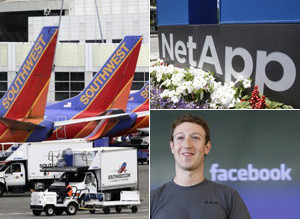
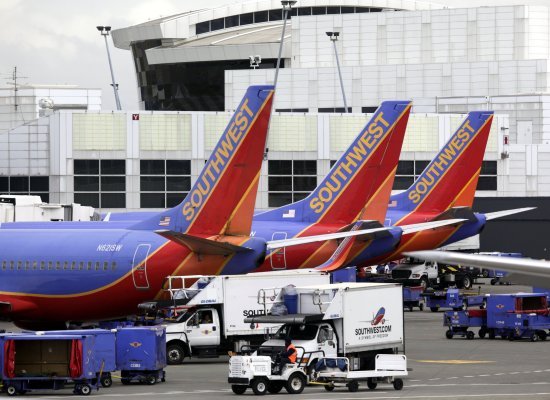
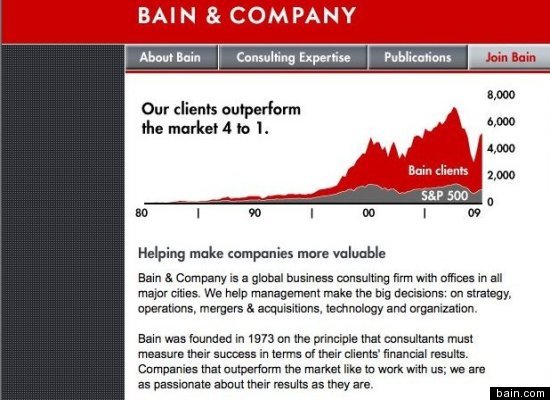
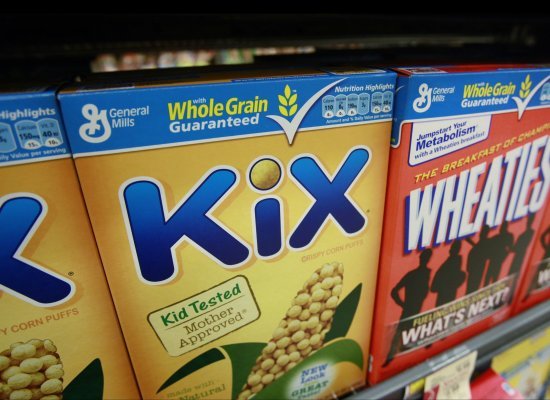
The best places to work in America include Facebook, Southwest Airlines and the PR giant Edelman, according to the 3rd annual version of career website GlassDoor.com's "Employees' Choice Awards" list. The rankings are based on responses 20-question survey administered by GlassDoor and cover categories like career opportunities, communication, compensation and benefits, employee morale and work/life balance.
One Palo Alto, California-based employee of a very prominent web company (we'll let you guess which company) had this to say about their employer: "The energy and direction of the company! There's plenty of opportunity to take on new responsibilities and build the future of [this company]."
Which companies were voted by employees as the best places to work? Check out the top 15 below and visit GlassDoor for more information:
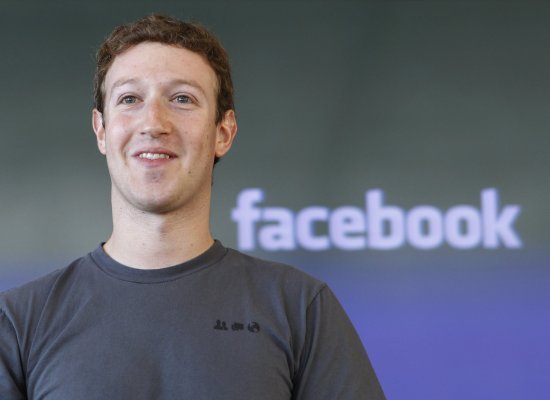
#1 Facebook
9:04 AM 0
(The) Greatest Thing Facebook Ever Did Was Drop The “The”

Or so argues this music video about ex-Facebook president Sean Parker’s mythical contribution to humanity. Behold as a goofily dressed and bewigged Parker sings about the apocryphal moment (as seen in The Social Network) where he convinced founder Mark Zuckerberg to drop the “the” in TheFacebook and just go with Facebook.
The fictional rapper Parker goes for broke, urging that the lesson be applied universally to stuff like The Marines, The Pope, The Liberty Bell and Smokey The Bear. Yeah, what’s the deal with “The” anyways?
Anyways while I’m pretty sure this isn’t the first rap song to refer to the Napster founder, it’s sure to be the funniest.
My favorite lyric? “That’s my status so go ahead and ‘Like’ it.” Hot.
2:55 AM 0
Facebok Goes Down: 'Internal Prototypes' To Blame
Had trouble getting on Facebook earlier today? You weren't alone.
Facebook was down for many users at around 4:00PM ET on Thursday.
Facebook explained the outage after the site was back up and running:
For a brief period of time, some internal prototypes were accidentally exposed to people externally. As a result, we disabled the site for a few minutes. It's back up, and we apologize for the inconvenience.Mashable confirms that the outage took place around 4:15 p.m. (ET), around the same time the site began rolling out redesigned brand Pages, a new Photos section and a new Page management feature.
3:39 PM 0
Facebook to Offer Face Recognition for Photo Tagging
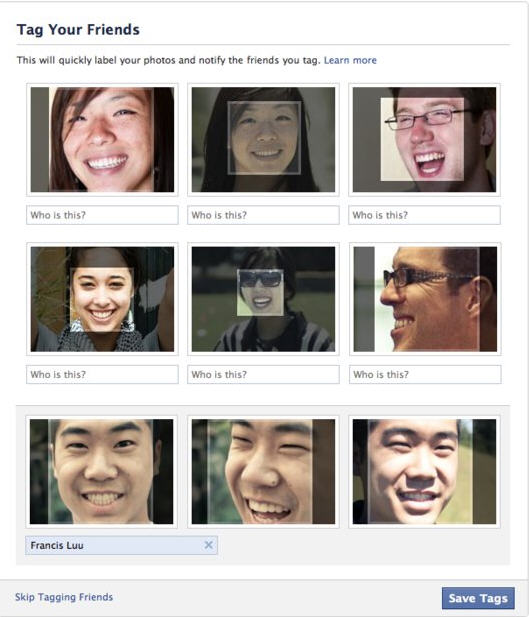
Just a few hours after Time magazine anointed Facebook CEO Mark Zuckerberg "Person of the Year," Zuckerberg's company announced yet another new service that will attempt to recognize pictures of your friends based on their facial characteristics.
Starting next week, Facebook will start using face recognition technology to assist its users in tagging pictures of friends.
Privacy Remains the Same
Facebook officials told me that the new service will not change the privacy settings related to tagging -- users will still get a notice if they are tagged and can remove the tag of any photos. Also, users continue to have control over who tags them.
Another comforting fact about the new tagging service is that it's not automatic. When you upload an album, Facebook will attempt to recognize the people in it. If it finds what it thinks is a match it will ask you to confirm. If you do nothing, the photo won't be tagged.
As has long been the case with photos, you will only be able to tag people you are friends with and, presumably to improve accuracy, Facebook will only compare the pictures against a relatively small sub-set of your friends -- perhaps as few as the 30 people you communicate with most often, which, according to computer scientists who study face recognition, can improve the accuracy.
Facebook will also be allowing users to opt-out of having their name suggested to friends during the photo tagging process. If you disable "Suggest photos of me to friends," your name will "no longer be suggested in photo tags, though friends can still tag you manually," according to the Facebook blog.
From a privacy standpoint this move should have little impact but it is yet one more example of how Facebook is encouraging people to share information, including photos
Hard to Do
Face recognition remain hard to do said Erick Learned-Miller, an associate professor of Computer Science at the University of Massachusetts whose research includes "machine learning" and "computer vision. And it's especially difficult if you're using a very large database. "The larger the number of people you are trying to identify, the more difficult the problem" he said in an interview.
"Up to now the reliability of face recognition is not very good," he said. "if you cold be right more than half the time that would be very very good."
Learned-Miller calls Facebook's plan to allow the user to confirm whether the photograph is accurately identified "makes a lot of sense," referring to the process as a "human in the loop method where you don't commit to a particular decision but you try to use the computer as a screen step that improves your own efficiency."
It also helps that Facebook can take advantage of previous tagging. If a person has been tagged in multiple photographs, that improves the chances of it working, according to computer scientists I spoke with.
Rolling Out Gradually
Facebook will roll out the service to a small number of users next week and expand from there. It will initially only be available in the United States.
This announcement follows one in September when Facebook announced group tagging, an improved photo viewer and higher-resolution images. More than 100 million photos are uploaded daily, according to Facebook officials.
Larry Magid is co-director of ConnectSafely.org, a non-profit Internet safety organization that receives financial support from several technology companies including Facebook.
2:33 AM 0
Facebook Rated 'Best Place To Work': Glassdoor.com

According to the results of the 2010 Employees' Choice Awards contest, Facebook received a score of 4.6 out of 5 possible points. Employees said they were "very satisfied" working at Facebook, and CEO Mark Zuckerberg earned a 96% approval rating. (Recently, Zuckerberg was named Time's "Person Of The Year.")
"Of all the strategies for making workers happy, turning them into millionaires is probably the most effective," writes the New York Times. "Many of Facebook's employees have been able to sell some of their shares to big investors or on exchanges where shares in private companies trade."
Naturally, there are drawbacks to working for the world's largest social network, according to a Glassdoor user claiming to be a Facebook operations engineer. "With the small number of employees, everyone is expected to change the world," the employee wrote on Glassdoor.com.
Glassdoor's yearly contest includes companies with a staff of 500 or more. Apple, Inc. scored the #20 spot among the 50 highest-rated companies, and CEO Steve Jobs received approval from 97% of employees. Google took the #30 spot, with CEO Eric Schmidt winning the hearts of 96% of employees.
Take a look at the complete list of top-rated companies on Glassdoor.com (PDF).
11:03 AM 0
Clicker Partners With Facebook To Offer Personalized TV Recommendations
Over the last several months, Facebook has been slowly ramping up its Instant Personalization program, which allows select third-party sites to access your public Facebook data as soon as you visit them, without having to ‘Connect’ to Facebook. Done right, it can be a pretty slick experience, and today Facebook is announcing that it’s adding one more site to the program: Clicker, one of the web’s best resources for finding TV shows and movies online.

It’s a logical integration, and it should help users sift through the vast amount of video content that’s been indexed by the site. After logging in, Clicker told me that I’d probably be interested in the latest episode of Glee, based on ‘Likes’ from 9 of my friends. Good job, Clicker — I happen to be a Glee fan, though the plot lines sometimes me make want to throw my remote across the room (breathe, Jason, breathe). The site is also recommending Terriers based on one ‘Like’ from a friend of mine, which sounds interesting. I’m not sure what to make of the suggestion to rate the ‘Mariah Carey: Merry Christmas to You’ special.
Facebook says that recommendations improve as you ‘Like’ more TV shows and movies, and Clicker’s own rating buttons will obviously improve recommendations as well.
Facebook launched Instant Personalization at its f8 event last April, when it was integrated into three initial partners: Pandora, Microsoft’s Docs.com, and Yelp. The program sparked quite a bit of controversy, in part because it was difficult to opt-out (which Facebook has since remedied, mostly). I think it’s still a bit jarring when you visit a site for the first time in months and it knows who you are, but it doesn’t seem like Facebook’s users mind much.
Since that initial launch (and a few months with no new integrations as Facebook waited for the backlash to die down) Instant Personalization has been added to Rotten Tomatoes, Scribd, and Bing.
Facebook says that recommendations improve as you ‘Like’ more TV shows and movies, and Clicker’s own rating buttons will obviously improve recommendations as well.
Facebook launched Instant Personalization at its f8 event last April, when it was integrated into three initial partners: Pandora, Microsoft’s Docs.com, and Yelp. The program sparked quite a bit of controversy, in part because it was difficult to opt-out (which Facebook has since remedied, mostly). I think it’s still a bit jarring when you visit a site for the first time in months and it knows who you are, but it doesn’t seem like Facebook’s users mind much.
Since that initial launch (and a few months with no new integrations as Facebook waited for the backlash to die down) Instant Personalization has been added to Rotten Tomatoes, Scribd, and Bing.
10:18 AM 0
Subscribe to:
Posts (Atom)
