


Showing posts with label microsoft. Show all posts
Showing posts with label microsoft. Show all posts
Microsoft Will Reportedly Stop Making Zune Devices
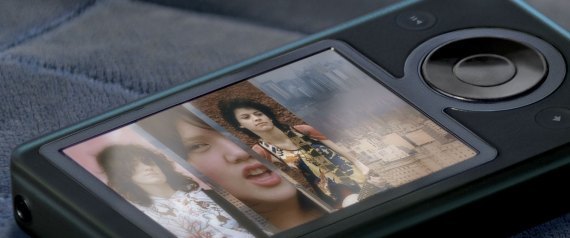
According to Bloomberg, Microsoft will no longer release new versions of the Zune player, due to poor demand. As recently as February 2011, Microsoft insisted that Zune wasn't going anywhere.
In some sense, this is true. The software, at least, will live on, as Microsoft moves its attention to mobile phones, using the Zune software to let customers access media on those phones.
Microsoft released the following comment to Winrumors:
We have nothing to announce about another Zune device - but most recently have introduced Zune HD to Canada via Zune Originals store and remain committed to supporting our devices in North America. We are thrilled by the consumer excitement for Zune across many new platforms, including Windows Phone 7 and Xbox 360. Our long-term strategy focuses on the strength of the entire Zune ecosystem across Microsoft platforms.Zune, first introduced in 2006, did not crack the list of the top five in portable music players in 2010.
6:42 AM 0
Microsoft Fights Apple Trademark On 'App Store'

The post adds, "Ngram data shows no usage of 'App Store' or 'app store' from the time of 1800 to 2008. I was suspicious of this, but using the terms 'app,store' separately produced lots of data points. My tentative hypothesis is that Ngram is using data that existed before the App Store went public and thus will not show up in Ngram."
--
Microsoft is fighting Apple over two words: "app store."
Apple filed an application in 2008, the same year it launched its iTunes App Store and the iPhone 3G, to trademark the term "app store." Nearly a year after the U.S. Patent and Trademark Office allowed any opposition to the application to be filed, Microsoft is now disputing the proposed trademark, claiming that the term is a generic one and that "app store" should "continue to be available for use by all without fear of reprisal by Apple." (See Microsoft's filing.)
"An 'app store' is an 'app store'," Russell Pangborn, Microsoft's associate general counsel, said, according to the BBC. "Like 'shoe store' or 'toy store', it is a generic term that is commonly used by companies, governments and individuals that offer apps."
Apple's application specifies that the phrase describes "retail store services featuring computer software for use on handheld mobile digital electronic devices and other consumer electronics," among other offerings.
The Cupertino company stands by its claim, noting "the vastly predominant usage of the expression 'app store' in trade press is as a reference to Apple's extraordinarily well-known APP STORE mark and the services rendered by Apple thereunder."
2:48 AM 0
Where's Microsoft's Tablet? Its Answer To The iPad Is Still In Pieces

Microsoft's biggest news was that the next version of Windows would run on the style of cell phone chips that power the iPad and other tablets today. It proved it with a series of demonstrations on half-built computers; on the monitors hooked up to those machines, the software was indistinguishable from the current Windows 7.
Microsoft's missing tablet served as a reminder that the world's largest software maker remains years from a serious entry into this new category of devices. It also raised more doubts about whether Microsoft Corp. will ever be able to grab a meaningful piece of this fast-growing segment. If it can't, Microsoft Corp.'s dominance of personal computers may become increasingly irrelevant as people embrace ever-sleeker portable devices.
CEO Steve Ballmer mostly lingered on what went right last year when he gave the company's customary keynote on the eve of the International Consumer Electronics Show on Wednesday. He had his share to boast about. Xbox 360 and the Kinect motion-sensing controller that's racked up more than $1 billion in sales in just two months, a ground-up overhaul of the Windows smart-phone software and rapid adoption of Windows 7 on PCs are all legitimate successes.
Still, it's hard for anyone to applaud Microsoft without noting the threats posed by the growing popularity of Apple Inc.'s iPad. It's also hard to see Windows as a tablet contender amid an onslaught of new tablets running Google Inc.'s Android software, which has already helped turn mobile phones into mini-computers.
Those concerns have been weighing on Microsoft stock, which has hovered around the $20 to $30 range for the past decade. Apple, on the other hand, has seen its share price more than triple since the first iPhone was announced in early 2007. Last year, Apple's market capitalization surpassed Microsoft's, making Apple the second-largest U.S. public company after Exxon Mobil Corp.
Microsoft has not been absent from the tablet discussion – Windows tablets have been around for years, but the devices never caught on with the mainstream. At last year's gadget show, Ballmer demonstrated a sleek "slate" from Hewlett-Packard Co. that runs Windows 7, and today there are several iPad-esque tablets that use Microsoft's operating system.
But those gadgets have none of the iPad's cachet, and Microsoft has done little to market them. And it's the upcoming Honeycomb version of Android, Google's first to be designed specifically for tablets, that is seen as the best shot to challenge Apple.
Many analysts and design experts say Windows 7 is doomed to fail as a tablet system because it was created with the keyboard and mouse in mind. At best, said technology industry analyst Rob Enderle, Windows 7 tablets are a stopgap measure while Microsoft pushes ahead on what will likely be called Windows 8.
Microsoft declined to make Ballmer available for an interview Thursday. Given the rudimentary proof-of-concept work Microsoft demonstrated Wednesday, and the difficulty of the task of building a multi-platform operating system, analysts don't expect a new Windows to arrive for at least another two years. Microsoft moved late in part because it didn't take tablets seriously.
"Remember, we just had the netbook scare," Enderle said in an interview. Netbooks, a class of cheap, under-powered laptops that at first ran versions of the free, open-source Linux operating system, were heralded as the end to Windows' domination. But Windows soon edged out Linux on netbooks; shortly thereafter, consumers realized the devices weren't good for such tasks as watching online video. The phase passed so quickly that when the industry moved on to tablets, Microsoft expected to see the same progression, Enderle said.
The factor Microsoft apparently failed to take into consideration was Apple, which scoffed at netbooks but took the tablet very seriously. When the iPad launched, Apple's design and marketing savvy tipped tablets into the mainstream.
"Now, they recognize that they've got a problem," Enderle said.
In the near term, worrying about Microsoft crumbling at Apple's feet seems overblown despite its stagnant stock. After all, the software maker has for years handily fended off challenges to its cash cows, Windows and Office, from the likes of Google and Apple.
The company, with more than $40 billion in cash on its balance sheet, can afford to slog from behind in areas such as search and smart phones. Its earnings rose 29 percent and revenue grew 7 percent in its last fiscal year that ended in June, while most other companies were foundering in the global recession.
Microsoft's dividends are generous and steady. Ballmer frequently draws criticism from the media but wins high praise from analysts and large shareholders for delivering quarter after quarter of strong results that just about any other CEO would envy.
But some analysts fear that missing the tablet boat might make a lethal crack in Microsoft's complete dominance in the PC market.
Wells Fargo Securities analyst Jason Maynard said he worries that even though Microsoft still generates the bulk of its wealth from corporate spending on technology, consumers are starting to have more sway in deciding the kinds of devices that make it into the workplace.
This trend, Maynard said, could become the "Trojan horse" that Apple needs to increase Mac sales to businesses, or that Google needs to chip away at Microsoft's hold on e-mail and desktop software.
When Microsoft changes direction, it must weigh the affect its moves will have on more than a billion Windows PC users. Roger Kay, founder of the research group Endpoint Technologies Associates, said this hobbled Microsoft's tablet planning. It can't afford to repeat the pattern when the next hot device trend lands.
"It's clear Microsoft has to become more nimble," Kay said. "It may be able to recover from this tablet debacle, but this won't do for business as usual."
___
AP Technology Writer Joelle Tessler in Washington contributed to this report.
3:50 AM 0
Microsoft tries to redefine the couch potato
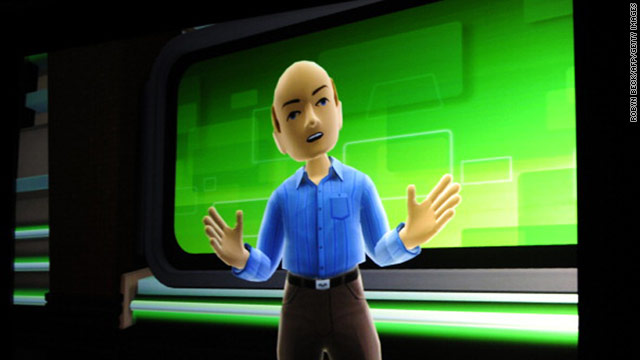
Las Vegas (CNN) -- Microsoft on Wednesday announced plans to redefine television as a medium that viewers can control by waving their hands and talking rather than clicking on remotes.
In a speech to open the Consumer Electronics Show in Las Vegas, company CEO Steve Ballmer also said he aims to make TV more social -- letting viewers chat with each other as avatars in virtual settings and place live bets on sporting events from the TV screen.
Perhaps it's time to say goodbye to the old-fashioned couch potato.
At the center of this new vision for the living room is the Xbox 360, Microsoft's internet-connected gaming system that, thanks to an add-on called Kinect, can read and interpret players' motions.
"Your Xbox is becoming the hub of your living room," he said. "It is your gaming system. It is your movies. It is your TV experience."
Ballmer announced an update to that system that lets Kinect's cameras read facial expressions and mouth movements in addition to what their arms and legs are doing.
Called "Avatar Kinect," this new feature, which is due out in the spring, will allow friends to meet up as avatars -- or video-game likenesses of themselves -- in virtual settings. A demo of this feature showed avatars chatting at a virtual-world tailgate while sitting in digital, plaid lawn chairs. In another demo, female avatars got together on a neon set, as if they were collaborating on an online talk show.
Kinect's cameras watch the friends from the top of their TVs and translates their facial expressions into the digital hangout.
"As you can see now Kinect can track features like your smile, your laugh and even the raise of your eyebrows," Ballmer said, offering a demo of himself as a bald avatar -- his digital eyebrows bouncing up and down.
Ballmer described these virtual meet-ups as a "new way to socialize." But, even during his speech, some Twitter users wrote they found that idea downright creepy.
"This seems unhealthy," one Twitter user wrote.
"Will it also track Eye Winks? or false eyelashes? What about coloured contact lens?" wrote another.
Others wrote that they're fine with non-Microsoft devices controlling their living room electronics experience. "Sorry Ballmer, my PS3 is the hub of my living room," one @cnntech Twitter follower wrote, referencing the Sony gaming system.
The Avatar Kinect feature is available only to people who pay a subscription fee for an Xbox Live membership, which costs about $60 per year.
Even without the avatars, TV is getting more social as it brings elements of the internet into the living room, Ballmer said.
Microsoft announced a partnership with ESPN, for instance, that lets people watch the BCS college football championship game over Xbox Live.
Viewers can chat with friends on the TV screen during the game and place non-monetary bets about who they think will win. They can see how their predictions stack up against that of their friends and the Xbox Live community at large.
Football fans would be ranked according to success, allowing sports fans to "earn their bragging rights," said Ron Forbes, from Microsoft's interactive entertainment division.
"Now I can make my picks and trash talk as I'm watching the game," he said. "Not on e-mail, not over text -- right in my living room on the TV."
This trend of internet-enabled, or "connected" TV is set to be a major theme of this year's CES, where TV makers from Panasonic to Sony are announcing app stores and other features that are designed to bring social media and Web experiences to TV.
Some of these companies work internet features directly into the television instead of requiring a separate gadget, as is the case with Microsoft's Xbox.
Others, like the Yap.tv app for the Apple iPad, aim to let another device provide a social experience that can supplement live TV viewing.
The idea of internet TV has been tried many times before but has never gone fully mainstream.
But Microsoft's internet-TV system does do one thing other don't -- full-body motion control. The company highlighted this point repeatedly, announcing partnerships, for instance, with Netflix and HuluPlus that let Xbox Kinect users control those video apps by waiving their hands and talking to the system to select and play movies.
It's a "new world of controller-free entertainment that you cannot find anywhere else," Forbes said. The company said it had sold 8 million Kinect sensors in 60 days, beating its goal of selling 5 million during that timeframe.
The keynote address also highlighted other Microsoft efforts, including Windows Phone 7 and the Windows PC operating system, which is in the process of being upgraded to work on a range of devices, including buzz-worthy tablet computers.
Microsoft is widely criticized as being behind the curve on developing an operating system for tablets.
The company promised an update to its mobile Windows Phone 7 operating system that will add copy-paste functionality and the ability to switch between apps more quickly.
Those features are already available from the two hottest smartphone ecosystems: the Apple iOS and Google Android.
Some bloggers and wrote that Microsoft hid its skeletons in the closet during the speech -- straying from tablets and smartphones, which are big topics with other companies. But Ballmer said Microsoft is looking to the future -- and that will include all tech platforms, not just personal computers. The company aims to "redefine what is really possible" with technology, he said.
10:43 AM 0
Microsoft’s Steve Balmer Demos Cool iPad-Influenced PCs [CES 2011]

LAS VEGAS, CES 2011 — One of the interesting things about the iPad is its influence on some new Windows PCs.
During Microsoft CEO Steve Balmer’s keynote, for example, a couple of interesting tablet/PC hybrids were shown off that showed the influence of Apple’s iPad, but weren’t shameless rip-offs of the device.
The coolest was a double screen PC from ASUS that featured a touch-sensitive screen where the keyboard should be.
The PC was able to scroll a page up and down both screens, from the lower screen to the upper screen and back again.
And when ten fingers were touched to the horizontal screen, it turned into a touch keyboard. Very cool. It’s reminiscent of Microsoft’s cancelled Courier tablet and an OLPC XO-2 design concept that made the rounds a few years ago (and I personally was hoping would be Apple’s then-secret “Brick project).
Also demonstrated was a Samsung tablet that converted from a laptop into a tablet like a big slider phone. When the keyboard is out and the screen up, the screen tilts backwards and forwards like a traditional laptop. But when the device is flattened out, the keyboard slides behind the screen and it converts into a touchscreen tablet.
Both were pretty cool new form factors — and not something that was obviously copied from Apple (unlike many other products here). Rather, the influence was derivative, and far more creative.
The keynote also featured a new version of Microsoft’s Surface tabletop that is now only 4-inches thick. Instead of using cameras mounted below the screen, Microsoft has developed Pixel Sense, an IR sensor system that turns every pixel of the screen into a camera. As well as being very responsive, the screen is able to recognize images: from barcodes to text.
“Only the imagination limits what you can do with a PC today,” said “Balmer. “I can’t tell you how excited I am personally about some of the new form factors.”
2:21 AM 0
Microsoft Extends 360 With Avatar Kinect, Netflix Streaming And Hulu Plus With Kinect

The 360 is turning into more of an all-purpose living room machine, and the Kinect is blowing up. That’s the takeaway from the Ballmer keynote here at CES. They’ve sold a huge amount of Kinect — 8 million, far more than the 5 million they predicted, and which we were all skeptical of. But it’s a surprise hit and I think that’s indicative of both its unique appeal (even the haters have to admit it’s unique) and the growing importance of a powerful box in the living room.
Avatar Kinect? A fancy toy, and I’m not buying it. But I’m not the target audience. I’d rather have the hands-free media control. Either way, though, it’s more stuff the 360 can do, and the central hub for media, games, and communication is obviously becoming a popular and contentious product category.
There was also another demo of the new Surface we saw earlier, but I’m disappointed to see that it’s being reserved for commercial applications, like the first one. My god, Microsoft! You’ve got something genuinely original and fun to use, and you’re restricting it to casino lobbies!

The keynote wasn’t much of a blockbuster, though to be honest Microsoft has rarely attempted to bust blocks. They’re about building platforms, and then building on those platforms. What do you do when your platforms pass out of vogue? Xbox still has room to grow, but WP7 will never achieve the reach of Windows Mobile, the popularity of iOS, or the increasing ubiquity of Android. What about Windows? It’s selling like hotcakes, but as I argued, they need to change or the decline will be apparent.
The expansion to ARM and SOCs is a little late but still savvy for Microsoft. It’s something that needed to happen eventually, and hopefully we’ll see it pan out. The Wintel hegemony has been around for a long time, and it’s long past due for disruption. I won’t say they’ve disrupted themselves, but at least they didn’t wait until they were completely backed into a corner. The moves they make at those times tend to be like those a cornered animal makes: desperate and savage. Like Windows Mobile 6.5.
It was more, as it usually is, a “state of Microsoft” than a blast of new stuff. The advances Ballmer described will make some ripples, but when will they make waves again?
2:02 AM 1
Microsoft Surface is Now Thinner, Smarter & Cheaper [PICS]

Gone is that cumbersome cube-shaped box with cameras inside. Now, there’s a piece of super-tough Gorilla Glass (the same glass that’s on the front and back of the iPhone 4) on top of what looks like a parson’s table. The whole thing is only four inches thick and works with faster processors and sophisticated infrared sensors that give it finer resolution.
The real secret sauce is what Microsoft calls Pixel Sense, a miniaturized version of all those cameras that were formerly mounted underneath the glass surface of the table. Not only is this new version a lot tougher than its predecessor, making it a much more appropriate tabletop for rowdy bars; it’s also a lot smarter. As Microsoft put it, “Every pixel is acting as a camera, so the surface of the PC can actually see.”
Microsoft has taken the Surface concept another step further; now in addition to sensing fingers touching it, it can also read documents placed on its tabletop. In the demo, a piece of paper placed on the table was easily read by the Surface’s touchscreen.
The demo was remarkable. This technology is getting a lot cheaper, and Microsoft says you might be seeing Surface PCs in a lot more places soon, such as bars, kiosks and other places developers might dream up that we haven’t even thought of yet.


1:59 AM 0
New Version Of Windows To Be Revealed By Microsoft
The tech giant will unveil a new Windows OS in early January at the Consumer Electronics Show, according to Bloomberg. Microsoft has long relied on Intel chips, but ARM's designs, which consume less power than other chips, will allow devices the capacity for much-extended battery life.
Microsoft signed an expanded licensing agreement with ARM back in July, though they were coy about the details.
"ARM is an important partner for Microsoft and we deliver multiple operating systems on the company's architecture," Microsoft spokesman KD Hallman said in a statement this summer.
But the agreement has increased speculation that Microsoft plans to use their relationship with ARM to fight Apple in the growing tablet market, as well as the smartphone market. Apple has sold over seven million iPads since their April debut. The iPad runs on ARM chips.
Others predict that the Windows OS is part of an overall move for Microsoft towards a simpler, more "modular" interface, much like Apple's iOS. Full-blown OS's like Microsoft's most recent WIndows 7 are considered too bulky to run on the limited memory of mobile devices. Though Windows Phone 7 exists for smartphones, a comparable tablet platform has not yet been revealed.
Microsoft has failed thus far to present a real threat to the iPad, whose sales make up 95% of the tablet market, according to Strategy Analytics.
6:42 PM 0
Microsoft: 1.5 million Windows Phone 7 handsets “sold” in first six weeks

Windows Phone 7 launched in Europe and the Asia Pacific region on October 21 and in the United States and Canada on November 8.
The news comes mere weeks after Microsoft explicitly declined to talk about sales numbers.
Unofrtunately, we still don’t know how many actual end users have purchased Windows Phone 7 devices, but this is a start.
Berg repeated that Microsoft realizes it’s far behind, reiterating that the company doesn’t regard things as a sprint and that it’s in it for the long run.
Just yesterday, IDC analyst Al Hilwa praised the fast growth of the Windows Phone 7 Marketplace, which has reached 4,000 apps just two months after its launch, dubbing it “one of the most rapid ramp-ups in recent times”, faster than Android.
So is Berg satisfied with the sales numbers? Why, yes, unsurprisingly:
Yes, and I think our expectations are realistic for a new platform. We started fresh with Windows Phone 7, and it’s a different kind of phone. Measuring for success is more long term than short term. We launched with many of the top mobile operators in the world, and even more in the coming year in 2011.Berg also says his team is on a path to start releasing the “first of several updates” to the platform in the next couple of months.
We have 18,000 developers who are developing for our marketplace. It’s just getting better and better.
7:41 AM 0
Microsoft's Kinect Selling Twice As Fast As The iPad

Kinect, Microsoft's new controller-free gaming peripheral for the Xbox 360, has been selling at a breakneck pace, with 2.5 million sensors sold within its first 25 days on the market (Read reviews of the Kinect).
As ReadWriteWeb notes, this means consumers have been purchasing Kinect twice as quickly as the iPad, which hit the 2 million mark two months after its release. Based on Kinect's sales thus far, ReadWriteWeb estimates that Microsoft is selling 100,000 Kinects per day. With approximately 4.5 million iPads sold every 90 days, Apple is moving an average of 50,000 iPads per day.
There are some caveats to these calculations--although they aren't likely to stop the Redmond giant from toasting its victory against Apple.
The Kinect figures include sales over Black Friday, typically the busiest shopping day of the year. And Microsoft's gaming gadget ($150-$400 each) is around half as expensive as Apple's iPad, which starts at $500. The two are also very different devices, one a gaming accessory to be used in the home, the other a portable tablet computer.
Still, the numbers suggest Microsoft has a hit on its hands, good news for a company looking for an "in" with consumers and high hopes of enticing non-gamers to fire up their Xboxes.
Microsoft hopes to sell a total of 5 million units by the end of the holiday season. Do you think they can meet that goal?
7:39 AM 0
EXCLUSIVE: How The World's Tech Titan Lost Its Buzz And Became The 'Underdog'
Facebook's chief executive Mark Zuckerberg recently took the stage at a joint press conference alongside another large technology company. He described his partner using a once-unthinkable designation.
"The thing that makes Microsoft a great partner for us is that they really are the underdog," Zuckerberg said. "Because of that, they're in a structural position where they're incentivized to just go all out and innovate."
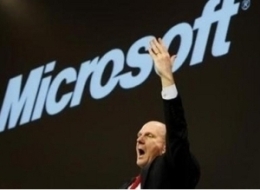 Microsoft as underdog. At the beginning of this decade, this description would have been ridiculous, like referring to the Yankees as an unsung, longshot baseball club. From the spread of personal computing through the dawn of the World Wide Web, its software governed the desktops of more than nine in ten desktop computers. Microsoft was so dominant that it became a symbol of monopoly power run amok, supposedly snuffing out innovation. Its rivals affixed pejorative labels like "Death Star" and "Evil Empire," accusing Microsoft of exploiting its control of the desktop to smother any and all potential competitors. Antitrust authorities in Washington and Brussels pursued a veritable crusade to break Microsoft into bite-sized pieces.
"Back in the 80s and 90s, Microsoft was seen as invulnerable," says Howard Anderson, a senior lecturer at MIT's Sloan School of Management.
But now, after a lost decade that has seen its fortunes sag in multiple businesses, this same company is--not without justification--referred to affectionately as the underdog by the head of a Web business that did not even exist when Microsoft first developed an Internet browser. A Newsweek columnist recently dismissed Microsoft as no longer a source of fear in the technology world, but rather "a bit of a joke." Nearly ten years ago, a newspaper had declared Microsoft a step away from "world domination."
How did such a seemingly indomitable enterprise lose its formidable grip on the marketplace? Are Microsoft's best days now behind it? Can it recover its former glory (if not its notoriety) in the twenty-teens?
Microsoft's conspicuous slide attests to the tenuous nature of power and supremacy in the Internet age, and the degree to which the product itself--technology--can radically reshape business models, creating new markets for upstarts and opening pathways around previously insurmountable gatekeepers. In an era in which innovation is perhaps more important than ever, Microsoft's experience illustrates how nothing is really certain for anyone.
To be sure, Microsoft remains huge and powerful. It stands as the second-largest technology company on earth after Apple in terms of market capitalization. It boasted record sales of $62.5 billion in the 2010 fiscal year. Still, it has clearly lost much of its luster, suffering through a decade pockmarked by a series of spectacular disappointments made all the more frustrating by the glittering ascents of rivals such as Apple and Google.
For Microsoft, failures and missed opportunities have recently come to outshine its many successes. There was the delay--and disaster--of Microsoft's Windows Vista operating system, widely considered one of the worst tech debacles of the decade. The software that came to market months behind schedule was panned by frustrated customers who found the too-expensive upgrade bloated, slower than its predecessor, and incompatible with hardware. There was its failed attempt to purchase Yahoo, which rebuffed many months of advances in what became a humiliating spectacle, depriving Microsoft of a crucial expansion into Web searching. There was Microsoft's new line of Kin smartphones--a D.O.A. product the company killed just 48 days after launch. There was Microsoft's disappointing effort to launch a digital music player, Zune--which has proven no match for Apple's iPod--and its failure, thus far, to produce a credible rival to the iPad, even though Microsoft led the way with a "trailblazing" tablet PC in 2001.
Seven years ago, Microsoft still controlled 35 percent of the market for software running mobile phones, but that share has since slipped to 15 percent. Internet Explorer, the Web browser whose dominance put Microsoft cross-wise with federal antitrust authorities, recently dipped below 50 percent of the market.
All of this has diminished the biggest number of all: After reaching a peak market capitalization of $642 billion in September 2000, Microsoft's worth has been sliced in half.
These reversals have occurred even as Microsoft has spent astronomic sums on research and development--$8.7 billion in the last year alone. Microsoft has also lost ground in key areas in which the Redmond giant had viable contenders well before the competition. Microsoft saw the potential of television in the mid-1990s with WebTV, years before companies like Apple and Google took up the battle for the living room.
In short, changing appetites of the marketplace, technological evolution and questionable decision-making inside Microsoft itself have combined to accomplish what antitrust regulators never did: rolling back the company's dominance and opening the terrain for newer, nimbler entrants.
For Microsoft, failures and missed opportunities have recently come to outshine its many successes. There was the delay--and disaster--of Microsoft's Windows Vista operating system, widely considered one of the worst tech debacles of the decade. The software that came to market months behind schedule was panned by frustrated customers who found the too-expensive upgrade bloated, slower than its predecessor, and incompatible with hardware. There was its failed attempt to purchase Yahoo, which rebuffed many months of advances in what became a humiliating spectacle, depriving Microsoft of a crucial expansion into Web searching. There was Microsoft's new line of Kin smartphones--a D.O.A. product the company killed just 48 days after launch. There was Microsoft's disappointing effort to launch a digital music player, Zune--which has proven no match for Apple's iPod--and its failure, thus far, to produce a credible rival to the iPad, even though Microsoft led the way with a "trailblazing" tablet PC in 2001.
Seven years ago, Microsoft still controlled 35 percent of the market for software running mobile phones, but that share has since slipped to 15 percent. Internet Explorer, the Web browser whose dominance put Microsoft cross-wise with federal antitrust authorities, recently dipped below 50 percent of the market.
All of this has diminished the biggest number of all: After reaching a peak market capitalization of $642 billion in September 2000, Microsoft's worth has been sliced in half.
These reversals have occurred even as Microsoft has spent astronomic sums on research and development--$8.7 billion in the last year alone. Microsoft has also lost ground in key areas in which the Redmond giant had viable contenders well before the competition. Microsoft saw the potential of television in the mid-1990s with WebTV, years before companies like Apple and Google took up the battle for the living room.
In short, changing appetites of the marketplace, technological evolution and questionable decision-making inside Microsoft itself have combined to accomplish what antitrust regulators never did: rolling back the company's dominance and opening the terrain for newer, nimbler entrants.
Captive To Its Own Monopoly
In the telling of many technology experts, many of Microsoft missteps and stumbles are, ironically, the direct result of its very successes and core strengths. Its stranglehold on the desktop, while hugely profitable, helped turn Microsoft into an out-of-shape competitor focused on defending turf rather than scoring new hits. In seeking to maintain its dominance on the desktop, it failed to anticipate and plan for the spread of computing to mobile phones, handheld computers, the cloud, and Web-based services delivered by companies such as Google. Now, people can write documents, run spreadsheets and browse the Web without indulging any Microsoft software, steering right around the software giant.
"The fundamental challenge for Microsoft is that it is trying to protect an enormously profitable core franchise at a time in which alternative means of achieving same results put the core franchise at risk," says David Yoffie, a professor of international business administration at Harvard Business School.
Microsoft declined requests for comment.
For a time, Microsoft's size, market share, and clout meant it was large enough to smother challengers.
"If there was a market someone wanted that Microsoft had, Microsoft would roll over them," says Anderson, the Sloan School of Management professor.
Most famously, when Netscape offered a Web browser for free, Microsoft bundled Internet Explorer with Windows, effectively inserting it smack on to the screen of the vast majority of the world's desktop computers. Suddenly, Microsoft controlled the primary gateway to the Web, with all the attendant opportunities.
But this mode of building new markets by tying new products to Windows sowed a monopolistic culture inside Microsoft, one that has proven damaging in a swiftly changing marketplace. As the company focused its energies on defending its grip on the desktop (not to mention defending itself against high-profile lawsuits aimed at curbing its power), it was slow to develop new products to serve changing ways of computing, such as relying on the Web-based software that has been central to the rise of its competitors.
"It has an executive team that had not truly lived in a world of competition for perhaps a decade, and its performance in the years between 2000 and 2010 have showed this," says George Colony, CEO and chairman of Forrester Research, a technology and market research firm. "Essentially, the company had no competition for a decade and so it became out of shape and not ready to truly compete."
The trouble for Microsoft is that its core business is so huge that it indeed warrants defending. Its Windows operating system and Office suite of applications together generated around 60 percent of Microsoft's sales in the 2010 fiscal year. But time and again, Microsoft's focus on defending these areas appears to have come at the expense of timely strategic thinking about how to expand into promising new areas.
Web searching, for example, seemed in the 1990s like a niche service that could be found anywhere. Many companies failed to realize that search could be turned into the immensely profitable business that Google has proven it to be, using it as a way to attract Web surfers who could then be pointed toward other experiences including services that Microsoft previously dominated, from e-mail to instant messaging to digital calendars.
Many observers argue that Microsoft has never recovered from the departure of its co-founder, the visionary and fierce Bill Gates. He was so adept at steering the behemoth he's proved all but impossible to replace. His successor, Steve Ballmer, who became chief executive in 2000, has by many accounts fallen short, failing to match Gates' technical expertise and foresight.
While Gates was a coder, Ballmer is known as a numbers cruncher, a math and economics major at Harvard, where he first met Gates. Without Gates' tech knowledge, some say, Ballmer has been unable to see the competitive opportunities and threats ahead.
Ballmer is "a brilliant Wall Street tactician," says the futurist Mark Anderson. "However, he couldn't program an Xbox game. He doesn't have that tech background."
Ballmer famously scoffed at the iPhone when it first launched. "There's no chance that the iPhone is going to get any significant market share," he told a television interviewer when Apple's now-ubiquitous smartphone was first released. Today, Apple owns nearly one-fourth of the market for software powering smartphones, while Microsoft has only one-tenth, according to ComScore, a marketing research firm.
An ongoing survey of over 1,000 Microsoft employees by review website Glassdoor.com concluded that 50% did not approve of Ballmer's performance as CEO, even though the company reported record revenue in the 2010 fiscal year.
Like perhaps any major company, Microsoft has also struggled to manage an increasingly enormous and fragmented operation, one with over 88,000 current employees worldwide and five major business units. In the telling of many insiders, internal politics and power struggles have often stifled innovation and thwarted coordinated action.
"A lot of time the phone division doesn't even know what the Windows division is doing," says Mary Jo Foley, a technology journalist and author of Microsoft 2.0: How Microsoft Plans to Stay Relevant in the Post-Gates Era.
In an op-ed in the New York Times published earlier this year, a former Microsoft vice-president, Dick Brass described the company as "a dysfunctional corporate culture in which the big established groups are allowed to prey upon emerging teams, belittle their efforts, compete unfairly against them for resources, and over time hector them out of existence."
The Found Decade?
Whatever happens next, at the dawn of a new decade, Microsoft appears set for a significant makeover. In recent years, as its many of its core businesses have suffered, the company has come to be seen as a predominantly business-focused enterprise, the supplier of software and services to major American companies. Many consumers have disdained Microsoft as an unsexy brand encountered primarily at work, while giving their leisure time over to the sleek realm of Apple, Google, and Facebook.
Now, Microsoft aims to change that, regaining the engagement of the American consumer even as it attempts to build on its strong legacy in the enterprise.
Microsoft chief research and strategy officer Craig Mundie says he believes the firm's way forward is to speak directly to the consumer, a strategy no doubt informed by Apple's success in getting parents, students, designers, and others to crave its white and silver devices.
"Apple has shown that if you don't focus on the consumer in this market, there's enormous risk," Yoffie says.
But many experts are dubious that Microsoft can pull off such a transition.
"Apple builds fanatics," says MIT's Anderson. "Microsoft builds people who are sullen, but not mutinous. Their DNA is large organizations, operating systems, and applications. Their DNA doesn't understand design and the consumer mind."
Microsoft's failure to see the opportunities that Apple handily seized upon hardly means it is doomed in the consumer space. HP, Sony, Nokia, and Research in Motion are just a few of the titans that missed what the Cupertino company anticipated and developed, from the rise of apps to the demand for a digital storefront for music. Some would even have bet on Apple's demise, a sign of just how much a technology company is capable of changing course--Dell founder and CEO Michael Dell said of Apple in 1997 that his advice to the then-ailing firm would be to "shut [...] down and give the money back to shareholders."
In its strange new incarnation as the underdog, Microsoft is adopting a different set of habits than those embraced by Microsoft, the overlord of yore--a cultural shift that may lead to greater innovation.
"The lost decade of Microsoft is propelling them forward now to be more daring," says Colony.
Zuckerberg, the famously youthful chief of Facebook, said he enjoyed partnering with the Microsoft because--in contrast to its days as an entrenched monopolist--the company is "just trying to rapidly gain share by doing awesome stuff that no one has talked about doing before."
In mobile, for instance, Microsoft has demonstrated a willingness to start from scratch. Microsoft's new Windows Phone 7 mobile operating system, with its trademark homescreen made up of colorful square tiles looks little like the competition and has drawn critical praise as fresh and unique. Its latest versions of Internet Explorer and Windows, and its search engine, Bing, all stand as major improvements over their predecessors.
By some accounts, Microsoft's efforts at refashioning itself have already reaped dividends. Its new mobile phone software is the product of a previously unmanageable cross-company collaboration in which the Zune, Xbox and browser teams all worked together to create an operating system that felt unified and consistent for the user. Microsoft has also scored points with Kinect, its new
controller-free gaming peripheral that allows users to play games just by moving their body, which has been praised as the "future of gaming" and sold faster than the iPad during its first month on the market.
But the positive reviews mean nothing unless the customer buys in. The mobile phone now stands as the single most important venue for Microsoft in the consumer space, the place that will determine whether the company goes down as an atrophied giant or can rise anew.
The Pew Research Center's 2010 Mobile Access survey found that 40% of adults in the U.S. now use their mobile phone to go online, compose email, or instant message--a number that will almost certainly swell.
"Phones are do or die for Microsoft," says Foley.
Microsoft's deep pockets make it impossible to dismiss Windows Phone 7's prospects. The company is trying to woo developers with free phones and cash--they offered game-maker PopCap $100,000 to create marquee apps--and are investing a reported half-a-billion dollars in a blowout marketing campaign.
As the iPad solidifies its place in the technology landscape, and as other tablet computers proliferate, Microsoft will need to catch up in that sphere as well--a painful reality for a company that launched its first tablet computer almost a decade ago.
According to research from Strategy Analytics, Apple controlled 95% of the tablet market in the third quarter of 2010. There's also Google to contend with, as a host of new tablets and laptops running its Android and Chrome operating systems will be coming the market over the next several months. While the last decade witnessed the browser wars, the coming decade will see Microsoft battle to be the operating system of choice across the slew of new devices that have come into play: phones, tablets, and TVs.
Some argue that Microsoft's aim for the consumer's affection is bound to fail, while distracting the company from its only viable mission: building on its already dominant position in the American workplace.
"If I were Steve Ballmer, I'd be doubling down on enterprise," says Foley. "That's where they're strongest and that's where they make their money."
Microsoft is hardly turning its back on the corporations that have been so good to it for so many years. It has been refining a range of offerings intended to tempt corporate IT departments, such as Azure, a cloud computing service that launched earlier this year and has attracted clients like eBay and the Department of Agriculture, and SharePoint, a line of business software products that has been Microsoft's fastest-growing ever.
But the giant is clearly gearing up for a major run to recapture the masses--this time, not by dint of its monopolistic grip on the desktop, but by the force and appeal of its innovations, another phrase not frequently uttered in connection with the company back in its halcyon days.
The only certainty is this: Microsoft will be around in a major way if for no other reason than the dollars at play.
"They have more money than God," says MIT's Anderson.
"The thing that makes Microsoft a great partner for us is that they really are the underdog," Zuckerberg said. "Because of that, they're in a structural position where they're incentivized to just go all out and innovate."
"Back in the 80s and 90s, Microsoft was seen as invulnerable," says Howard Anderson, a senior lecturer at MIT's Sloan School of Management.
But now, after a lost decade that has seen its fortunes sag in multiple businesses, this same company is--not without justification--referred to affectionately as the underdog by the head of a Web business that did not even exist when Microsoft first developed an Internet browser. A Newsweek columnist recently dismissed Microsoft as no longer a source of fear in the technology world, but rather "a bit of a joke." Nearly ten years ago, a newspaper had declared Microsoft a step away from "world domination."
How did such a seemingly indomitable enterprise lose its formidable grip on the marketplace? Are Microsoft's best days now behind it? Can it recover its former glory (if not its notoriety) in the twenty-teens?
Microsoft's conspicuous slide attests to the tenuous nature of power and supremacy in the Internet age, and the degree to which the product itself--technology--can radically reshape business models, creating new markets for upstarts and opening pathways around previously insurmountable gatekeepers. In an era in which innovation is perhaps more important than ever, Microsoft's experience illustrates how nothing is really certain for anyone.
To be sure, Microsoft remains huge and powerful. It stands as the second-largest technology company on earth after Apple in terms of market capitalization. It boasted record sales of $62.5 billion in the 2010 fiscal year. Still, it has clearly lost much of its luster, suffering through a decade pockmarked by a series of spectacular disappointments made all the more frustrating by the glittering ascents of rivals such as Apple and Google.
For Microsoft, failures and missed opportunities have recently come to outshine its many successes. There was the delay--and disaster--of Microsoft's Windows Vista operating system, widely considered one of the worst tech debacles of the decade. The software that came to market months behind schedule was panned by frustrated customers who found the too-expensive upgrade bloated, slower than its predecessor, and incompatible with hardware. There was its failed attempt to purchase Yahoo, which rebuffed many months of advances in what became a humiliating spectacle, depriving Microsoft of a crucial expansion into Web searching. There was Microsoft's new line of Kin smartphones--a D.O.A. product the company killed just 48 days after launch. There was Microsoft's disappointing effort to launch a digital music player, Zune--which has proven no match for Apple's iPod--and its failure, thus far, to produce a credible rival to the iPad, even though Microsoft led the way with a "trailblazing" tablet PC in 2001.
Seven years ago, Microsoft still controlled 35 percent of the market for software running mobile phones, but that share has since slipped to 15 percent. Internet Explorer, the Web browser whose dominance put Microsoft cross-wise with federal antitrust authorities, recently dipped below 50 percent of the market.
All of this has diminished the biggest number of all: After reaching a peak market capitalization of $642 billion in September 2000, Microsoft's worth has been sliced in half.
These reversals have occurred even as Microsoft has spent astronomic sums on research and development--$8.7 billion in the last year alone. Microsoft has also lost ground in key areas in which the Redmond giant had viable contenders well before the competition. Microsoft saw the potential of television in the mid-1990s with WebTV, years before companies like Apple and Google took up the battle for the living room.
In short, changing appetites of the marketplace, technological evolution and questionable decision-making inside Microsoft itself have combined to accomplish what antitrust regulators never did: rolling back the company's dominance and opening the terrain for newer, nimbler entrants.
For Microsoft, failures and missed opportunities have recently come to outshine its many successes. There was the delay--and disaster--of Microsoft's Windows Vista operating system, widely considered one of the worst tech debacles of the decade. The software that came to market months behind schedule was panned by frustrated customers who found the too-expensive upgrade bloated, slower than its predecessor, and incompatible with hardware. There was its failed attempt to purchase Yahoo, which rebuffed many months of advances in what became a humiliating spectacle, depriving Microsoft of a crucial expansion into Web searching. There was Microsoft's new line of Kin smartphones--a D.O.A. product the company killed just 48 days after launch. There was Microsoft's disappointing effort to launch a digital music player, Zune--which has proven no match for Apple's iPod--and its failure, thus far, to produce a credible rival to the iPad, even though Microsoft led the way with a "trailblazing" tablet PC in 2001.
Seven years ago, Microsoft still controlled 35 percent of the market for software running mobile phones, but that share has since slipped to 15 percent. Internet Explorer, the Web browser whose dominance put Microsoft cross-wise with federal antitrust authorities, recently dipped below 50 percent of the market.
All of this has diminished the biggest number of all: After reaching a peak market capitalization of $642 billion in September 2000, Microsoft's worth has been sliced in half.
These reversals have occurred even as Microsoft has spent astronomic sums on research and development--$8.7 billion in the last year alone. Microsoft has also lost ground in key areas in which the Redmond giant had viable contenders well before the competition. Microsoft saw the potential of television in the mid-1990s with WebTV, years before companies like Apple and Google took up the battle for the living room.
In short, changing appetites of the marketplace, technological evolution and questionable decision-making inside Microsoft itself have combined to accomplish what antitrust regulators never did: rolling back the company's dominance and opening the terrain for newer, nimbler entrants.
Captive To Its Own Monopoly
In the telling of many technology experts, many of Microsoft missteps and stumbles are, ironically, the direct result of its very successes and core strengths. Its stranglehold on the desktop, while hugely profitable, helped turn Microsoft into an out-of-shape competitor focused on defending turf rather than scoring new hits. In seeking to maintain its dominance on the desktop, it failed to anticipate and plan for the spread of computing to mobile phones, handheld computers, the cloud, and Web-based services delivered by companies such as Google. Now, people can write documents, run spreadsheets and browse the Web without indulging any Microsoft software, steering right around the software giant.
"The fundamental challenge for Microsoft is that it is trying to protect an enormously profitable core franchise at a time in which alternative means of achieving same results put the core franchise at risk," says David Yoffie, a professor of international business administration at Harvard Business School.
Microsoft declined requests for comment.
For a time, Microsoft's size, market share, and clout meant it was large enough to smother challengers.
"If there was a market someone wanted that Microsoft had, Microsoft would roll over them," says Anderson, the Sloan School of Management professor.
Most famously, when Netscape offered a Web browser for free, Microsoft bundled Internet Explorer with Windows, effectively inserting it smack on to the screen of the vast majority of the world's desktop computers. Suddenly, Microsoft controlled the primary gateway to the Web, with all the attendant opportunities.
But this mode of building new markets by tying new products to Windows sowed a monopolistic culture inside Microsoft, one that has proven damaging in a swiftly changing marketplace. As the company focused its energies on defending its grip on the desktop (not to mention defending itself against high-profile lawsuits aimed at curbing its power), it was slow to develop new products to serve changing ways of computing, such as relying on the Web-based software that has been central to the rise of its competitors.
"It has an executive team that had not truly lived in a world of competition for perhaps a decade, and its performance in the years between 2000 and 2010 have showed this," says George Colony, CEO and chairman of Forrester Research, a technology and market research firm. "Essentially, the company had no competition for a decade and so it became out of shape and not ready to truly compete."
The trouble for Microsoft is that its core business is so huge that it indeed warrants defending. Its Windows operating system and Office suite of applications together generated around 60 percent of Microsoft's sales in the 2010 fiscal year. But time and again, Microsoft's focus on defending these areas appears to have come at the expense of timely strategic thinking about how to expand into promising new areas.
Web searching, for example, seemed in the 1990s like a niche service that could be found anywhere. Many companies failed to realize that search could be turned into the immensely profitable business that Google has proven it to be, using it as a way to attract Web surfers who could then be pointed toward other experiences including services that Microsoft previously dominated, from e-mail to instant messaging to digital calendars.
Many observers argue that Microsoft has never recovered from the departure of its co-founder, the visionary and fierce Bill Gates. He was so adept at steering the behemoth he's proved all but impossible to replace. His successor, Steve Ballmer, who became chief executive in 2000, has by many accounts fallen short, failing to match Gates' technical expertise and foresight.
While Gates was a coder, Ballmer is known as a numbers cruncher, a math and economics major at Harvard, where he first met Gates. Without Gates' tech knowledge, some say, Ballmer has been unable to see the competitive opportunities and threats ahead.
Ballmer is "a brilliant Wall Street tactician," says the futurist Mark Anderson. "However, he couldn't program an Xbox game. He doesn't have that tech background."
Ballmer famously scoffed at the iPhone when it first launched. "There's no chance that the iPhone is going to get any significant market share," he told a television interviewer when Apple's now-ubiquitous smartphone was first released. Today, Apple owns nearly one-fourth of the market for software powering smartphones, while Microsoft has only one-tenth, according to ComScore, a marketing research firm.
An ongoing survey of over 1,000 Microsoft employees by review website Glassdoor.com concluded that 50% did not approve of Ballmer's performance as CEO, even though the company reported record revenue in the 2010 fiscal year.
Like perhaps any major company, Microsoft has also struggled to manage an increasingly enormous and fragmented operation, one with over 88,000 current employees worldwide and five major business units. In the telling of many insiders, internal politics and power struggles have often stifled innovation and thwarted coordinated action.
"A lot of time the phone division doesn't even know what the Windows division is doing," says Mary Jo Foley, a technology journalist and author of Microsoft 2.0: How Microsoft Plans to Stay Relevant in the Post-Gates Era.
In an op-ed in the New York Times published earlier this year, a former Microsoft vice-president, Dick Brass described the company as "a dysfunctional corporate culture in which the big established groups are allowed to prey upon emerging teams, belittle their efforts, compete unfairly against them for resources, and over time hector them out of existence."
The Found Decade?
Whatever happens next, at the dawn of a new decade, Microsoft appears set for a significant makeover. In recent years, as its many of its core businesses have suffered, the company has come to be seen as a predominantly business-focused enterprise, the supplier of software and services to major American companies. Many consumers have disdained Microsoft as an unsexy brand encountered primarily at work, while giving their leisure time over to the sleek realm of Apple, Google, and Facebook.
Now, Microsoft aims to change that, regaining the engagement of the American consumer even as it attempts to build on its strong legacy in the enterprise.
Microsoft chief research and strategy officer Craig Mundie says he believes the firm's way forward is to speak directly to the consumer, a strategy no doubt informed by Apple's success in getting parents, students, designers, and others to crave its white and silver devices.
"Apple has shown that if you don't focus on the consumer in this market, there's enormous risk," Yoffie says.
But many experts are dubious that Microsoft can pull off such a transition.
"Apple builds fanatics," says MIT's Anderson. "Microsoft builds people who are sullen, but not mutinous. Their DNA is large organizations, operating systems, and applications. Their DNA doesn't understand design and the consumer mind."
Microsoft's failure to see the opportunities that Apple handily seized upon hardly means it is doomed in the consumer space. HP, Sony, Nokia, and Research in Motion are just a few of the titans that missed what the Cupertino company anticipated and developed, from the rise of apps to the demand for a digital storefront for music. Some would even have bet on Apple's demise, a sign of just how much a technology company is capable of changing course--Dell founder and CEO Michael Dell said of Apple in 1997 that his advice to the then-ailing firm would be to "shut [...] down and give the money back to shareholders."
In its strange new incarnation as the underdog, Microsoft is adopting a different set of habits than those embraced by Microsoft, the overlord of yore--a cultural shift that may lead to greater innovation.
"The lost decade of Microsoft is propelling them forward now to be more daring," says Colony.
Zuckerberg, the famously youthful chief of Facebook, said he enjoyed partnering with the Microsoft because--in contrast to its days as an entrenched monopolist--the company is "just trying to rapidly gain share by doing awesome stuff that no one has talked about doing before."
In mobile, for instance, Microsoft has demonstrated a willingness to start from scratch. Microsoft's new Windows Phone 7 mobile operating system, with its trademark homescreen made up of colorful square tiles looks little like the competition and has drawn critical praise as fresh and unique. Its latest versions of Internet Explorer and Windows, and its search engine, Bing, all stand as major improvements over their predecessors.
By some accounts, Microsoft's efforts at refashioning itself have already reaped dividends. Its new mobile phone software is the product of a previously unmanageable cross-company collaboration in which the Zune, Xbox and browser teams all worked together to create an operating system that felt unified and consistent for the user. Microsoft has also scored points with Kinect, its new
controller-free gaming peripheral that allows users to play games just by moving their body, which has been praised as the "future of gaming" and sold faster than the iPad during its first month on the market.
But the positive reviews mean nothing unless the customer buys in. The mobile phone now stands as the single most important venue for Microsoft in the consumer space, the place that will determine whether the company goes down as an atrophied giant or can rise anew.
The Pew Research Center's 2010 Mobile Access survey found that 40% of adults in the U.S. now use their mobile phone to go online, compose email, or instant message--a number that will almost certainly swell.
"Phones are do or die for Microsoft," says Foley.
Microsoft's deep pockets make it impossible to dismiss Windows Phone 7's prospects. The company is trying to woo developers with free phones and cash--they offered game-maker PopCap $100,000 to create marquee apps--and are investing a reported half-a-billion dollars in a blowout marketing campaign.
As the iPad solidifies its place in the technology landscape, and as other tablet computers proliferate, Microsoft will need to catch up in that sphere as well--a painful reality for a company that launched its first tablet computer almost a decade ago.
According to research from Strategy Analytics, Apple controlled 95% of the tablet market in the third quarter of 2010. There's also Google to contend with, as a host of new tablets and laptops running its Android and Chrome operating systems will be coming the market over the next several months. While the last decade witnessed the browser wars, the coming decade will see Microsoft battle to be the operating system of choice across the slew of new devices that have come into play: phones, tablets, and TVs.
Some argue that Microsoft's aim for the consumer's affection is bound to fail, while distracting the company from its only viable mission: building on its already dominant position in the American workplace.
"If I were Steve Ballmer, I'd be doubling down on enterprise," says Foley. "That's where they're strongest and that's where they make their money."
Microsoft is hardly turning its back on the corporations that have been so good to it for so many years. It has been refining a range of offerings intended to tempt corporate IT departments, such as Azure, a cloud computing service that launched earlier this year and has attracted clients like eBay and the Department of Agriculture, and SharePoint, a line of business software products that has been Microsoft's fastest-growing ever.
But the giant is clearly gearing up for a major run to recapture the masses--this time, not by dint of its monopolistic grip on the desktop, but by the force and appeal of its innovations, another phrase not frequently uttered in connection with the company back in its halcyon days.
The only certainty is this: Microsoft will be around in a major way if for no other reason than the dollars at play.
"They have more money than God," says MIT's Anderson.
3:50 PM 0
Microsoft to Announce New Slates Aimed at the iPad
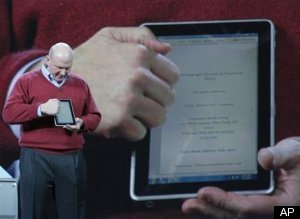
Since then, Microsoft has struggled to gain traction with a slate-like device, yet each year the company announces new products, software or operating systems that try to promote a world of Windows-based slate computers.
Next month, at the 2011 Consumer Electronics Show in Las Vegas, Microsoft will give it another try, presenting a slew of new slates that it hopes will offer some competition to the Apple iPad, which has quickly become the leader in this market.
According to people familiar with Microsoft’s plans, Steve Ballmer, Microsoft’s chief executive, is expected to announce a number of these devices when he takes the stage at C.E.S., showcasing devices built by Samsung and Dell, among a number of other manufacturing partners.
The people with knowledge of these devices asked not to be named as they are not authorized to speak publicly by Microsoft or partnering companies. Microsoft declined to comment about coming products that have not been announced.
The Samsung device is described as “similar in size and shape to the Apple iPad, although it is not as thin. It also includes a unique and slick keyboard that slides out from below for easy typing.”
The people familiar with this device said it would run the Windows 7 operating system when in landscape mode, but will also have a layered interface that will appear when the keyboard is hidden and the device is held in a portrait mode.
Microsoft hopes these slates will offer an alternative to the iPad because they move beyond play, people familiar with the tablets said. “The company believes there is a huge market for business people who want to enjoy a slate for reading newspapers and magazines and then work on Microsoft Word, Excel or PowerPoint while doing work,” explained a person familiar with the company’s tablet plans.
A person who works at Microsoft said the company was encouraging partners to build applications for these devices that use HTML5, the Web programming language. This person said the applications would not be sold in an app store, as with the Apple iTunes model, but Microsoft will encourage software partners to host the applications on their own Web sites, which will then be highlighted in a search interface on the slate computers. It is unclear if these applications will be ready for C.E.S. as most are still in production.
Another person with knowledge of Microsoft’s plans said Steve Ballmer might demonstrate a tablet and other companion devices running the next operating system, Windows 8.

10:40 AM 0
Subscribe to:
Posts (Atom)
