


Showing posts with label google. Show all posts
Showing posts with label google. Show all posts
Google Targets Small Businesses With $100 Million Worth Of AdWords Credits

Small businesses that sign up by December 31 have until mid-February to spend $100 on AdWords, after which they will be given another $100 credit. The promotion is good for “the first one million businesses only.” If one million businesses sign up and spend that $100 the total value of the campaign will be $100 million. Of course, the campaign won’t really cost Google anything. It is spending $100 to acquire these small local business as new customers. It has offered similar promotions in the past. But Google’s efforts go beyond offering these credits.
In fact, Google wants to make it so easy for small businesses to get on board, that it even offers a phone number to call up and a representative will help them set up their first campaign. This is a very different approach than the automated self-serve model Google was built on, but that is because local businesses need more hand-holding when it comes to online marketing. As Greg Sterling pointed out when the campaign kicked off in mid-December:
What we’re seeing at Google is a significant commitment to the local market and a related internal cultural shift.Google needs to find its next leg of growth and local (which is intimately tied with mobile) is where it is putting a lot of its fire power.
1:17 AM 0
Some Google employees defect, then rebel

Many computer engineers consider a job offer from Google as the golden ticket.
Outdoor volleyball courts, free gourmet food, on-site haircuts, massages and laundry are among the perks Google has offered its employees at its main campus in Mountain View, California.
But some of the people who do leave are challenging the company in the best way an engineer knows how: by developing programs that could detract from Google's core business.
Brian Kennish worked at Google for seven years, managing teams of engineers on a variety of products such as the Chrome browser and the moribund Google Wave.
Near the end of his stint at Google, Kennish developed a browser extension for Chrome called Facebook Disconnect.
The software blocks websites that have Facebook widgets installed from automatically sending information about the user back to the social networking company. Facebook Disconnect has 75,000 users, Kennish said.
"No one at Google asked me to do it," Kennish told CNN this week.
What sparked Kennish's project, he said, was reading the recent scrutiny of online data-collection tactics chronicled by news organizations. The Wall Street Journal has been running a series called "What They Know," and CNN had its own last week called "End of Privacy."
While Facebook and the applications that run on its platform can be considered personal-data hoarders, Kennish eventually realized his then-employer was, itself, among the biggest collectors.
To name a few practices, Google can track search queries over time, target ads to its Gmail users based on the contents of e-mails, and use a person's location data to determine which shops' ads it will show. Google, like many Web advertising companies, uses small files called cookies to track internet surfing habits in order to better target ads.
"I never worked directly with user data," Kennish said of his time at Google. "I didn't have a good sense of what was being collected. Privacy wasn't a passion of mine or something that I knew a lot about until basically two months ago, when I started reading about this stuff."
Kennish left Google in November to focus more on programs that empower people to take control of their privacy online.
"I had this holy-cow moment when I realized what was going on," Kennish said. "There's just so much unknown about what's being done with this data."
"I think there is a good reason to be concerned with it all and, frankly, to be fearful of it," he said.
Last week, he released a second browser extension, another tool for Google Chrome, called Disconnect. Once installed, the program blocks major internet companies, including Google, from installing cookies on -- and thus tracking -- a computer.
People using Disconnect can decide which cookies they'd like to allow onto their system. Cookies can be helpful when, for example, you'd like a website to remember your login credentials and not ask for them every time you visit.
"I would like to see us move to a point where all the data that's collected about folks is intentional," rather than without people's knowledge, Kennish said. "So if I give you permission to collect my data, then go ahead and do it."
In its first week, 25,000 people downloaded Disconnect. Kennish is releasing a new version Friday that lets users choose whether Google can personalize search queries based on the data it has about the person. By default, Disconnect blocks Google from doing this.
"Any data that's collected has the potential to escape the collector," Kennish said. "So I would like to see Google only collect data that I explicitly allow them to collect."
Google hosts a dashboard for users to review a breakdown of the messages and information attached to their accounts. The Google Privacy Center provides information on how the company collects data and lets people, whether they're registered with Google or not, opt out of ad and analytics tracking.
Michael Gundlach, another ex-Google engineer, developed an alternative to complicated opt-out systems that vary between ad networks. Like Disconnect, it's a browser extension, and there are versions for Chrome and Apple's Safari.
Called AdBlock, Gundlach's program can prevent Web pages from loading and displaying ads. That includes Google's ads, which account for the vast majority of the search giant's revenue.
AdBlock offers a setting to easily enable ads from Gundlach's former employer, though those ads are disabled by default. "Google didn't ask me to put that in," Gundlach wrote in an e-mail. "I find Google text ads to be useful."
Still, Gundlach says he blocks most ads because "I don't wish to be bombarded by consumerism."
The real economic conundrum: If website visitors don't pay figuratively -- by watching ads or by having their personal information sent to advertisers -- they may have to start paying real money for online services.
Kennish plans to devote six months to developing Disconnect and will reevaluate then whether it could be a sustainable business.
He's "pretty close" to releasing an extension for Safari and recently began working on one for Firefox, he said. If he's forced to abandon the project, the source code is freely available to any enterprising developers who want to take up the cause.
"The only business model I see," Kennish said, is to eventually provide a more advanced version of the software that costs money.
"When I use something like Google, I'm paying for Google with my attention and my data," he said. "There's no such thing as free. These are companies that have to pay employees' salaries."
Parts of Google's maturing business may clash with some of the wide-eyed engineers it hopes to attract, especially those passionate about taking risks to change the world, hopefully for the better.
But a Google spokesman, who declined to comment on most questions pertaining to this story, said the company's attrition rate -- that is, the percentage of employees that defect -- hasn't changed in more than seven years and is better than the industry standard.
In addition to all the on-campus amenities, a program called "20% Time" lets Google engineers devote a sizable chunk of their work weeks to projects of their choosing. (Kennish said he developed Facebook Disconnect after work hours.)
The perks haven't stopped some high-profile people from leaving the company.
Product designer Douglas Bowman left in a huff last year for a job at Twitter after reportedly becoming fed up with nearly three years of what he publicly described as Google's design-by-committee mentality.
Some notable Google alumni are spiting their former employer in a different way -- by joining Facebook.
The social network is perceived by some as Google's biggest rival. People are spending more of their time online using Facebook. They're thumbing through photos and asking questions to friends, rather than searching the wider Web. Google is unable to crawl most of the data posted to Facebook.
As Google-to-Facebook defections grow, Google is reportedly offering some employees multimillion-dollar packages to convince them not to go to Facebook.
After wooing executives who worked on Google-owned YouTube, Android and advertising; the architect of Google Maps; and at least two Gmail co-founders, this week, Facebook claimed Paul Adams, a former Google employee who was previously an outspoken critic of the social network. Sheryl Sandberg, Facebook's venerable chief operating officer, also came from the big G.
But abandoning Google hasn't always proved to be a wise or permanent move. Anna Patterson left the company in 2007 to start a rival search engine called Cuil. When that tanked, she returned to Google in September.
4:12 PM 0
Google Buys $1.8 Billion New York Office As Payroll Expands
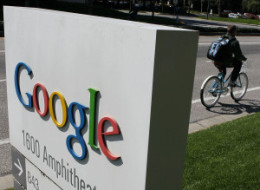
The Internet search leader confirmed the purchase Wednesday, three weeks after The New York Times reported Google Inc. would pay $1.8 billion for a 15-story building that spans an entire city block.
Google Inc. didn't disclose how much it paid for the office. The company moved into the former Port Authority building in 2006. It has become the second largest concentration of Google employees, ranking behind the company's Mountain View headquarters.
Engineers and advertising representatives primarily work at the New York office, located at 111 Eighth Ave. With about 2.9 million square feet, the office has more space than the Empire State building.
Google says it plans to add more workers in the office.
6:47 AM 0


Google Underwear Scandal: Japanese Woman Sues Over Photo Of Her Intimates

The woman claims to have looked up her own address using Street View and found a photograph of her home that included her intimate apparel hanging on a clothesline.
"I was overwhelmed with anxiety that I might be the target of a sex crime," the woman told a district court, the Telegraph reports, citing Japanese-language newspaper Mainichi. "It caused me to lose my job and I had to change my residence."
The woman, who says that Google removed the offending photo around the time she filed the suit, is seeking 600,000 Yen (about $7,000) in compensation for the ordeal. "I could understand if it was just a picture of the outside of the apartment, but showing a person's underwear hanging outside is absolutely wrong," the woman said in court, according to CNET.
The woman also claims to suffer from obsessive-compulsive disorder and said that finding the photograph of her underwear exacerbated her condition. "[S]he feared that everything she was doing throughout the day was being secretly recorded," writes the Telegraph.
Earlier this year, Google received widespread criticism when the company announced that its Street View cars had captured personal data over unencrypted Wi-Fi connections. However, Google's punishment by the FTC amounted to little more than a wrist slap.
Google recently launched its Street View service in Germany and, within the first month, captured a mysterious photo of a man apparently without underwear--or any clothes at all--climbing out of a car trunk. To see the strangest sights ever recorded by Google Street View, check out our slideshow of Street View's most mysterious photos.
6:47 AM 0
European Antitrust Inquiry Into Google Is Broadened

Joaquín Almunia, the European competition commissioner, announced a wide-ranging case against Google at the end of November, saying investigators would focus on whether the search engine company gave preferential treatment to its services when ranking search results, and whether it discriminated against competitors.
By taking over the German cases as well, Mr. Almunia will get access to additional evidence collected by authorities in Germany, where more than 80 percent of computer users rely on Google to search the Web.
The German cases also give a more European appearance to an investigation that so far has been dominated by complaints by companies that have received support from the software giant Microsoft.
Google said the decision was largely procedural because the European Commission takes over cases from member countries when there are overlapping issues.
“We continue to work cooperatively with the commission and national regulators, explaining many aspects of our business,” a Google spokesman, Al Verney, said. “There’s always going to be room for improvement, so we are working to address any concerns.”
The German publishers, known as the B.D.Z.V. and V.D.Z., and the mapping company Euro-Cities were told this week that the commission would take over their complaints, said Kay Weidner, a spokesman for the German Federal Cartel Office.
“The commission is now in charge of the aspects regarding search neutrality” in the two cases, Mr. Weidner said.
The cartel office was still evaluating whether to open investigations into other aspects of Google’s business practices in Germany, he said.
Jonathan Todd, a spokesman for the commission, confirmed that Mr. Almunia’s investigators were looking into aspects of the German cases that were similar to what was already under examination by the commission.
The B.D.Z.V. and V.D.Z., which count 450 newspaper and magazine publishers among their members, brought their complaint against Google a year ago at the German Federal Cartel Office.
The publishers accused Google of manipulating search rankings and have called on it to reveal its algorithm and stop giving preference to its services. The publishers also accused Google of failing to pay newspapers even though the company earned large amounts of money by posting advertisements near links to articles.
“We appreciate that the E.C. is now investigating the case as it could be one of the most important topics for the digital press in the coming years,” the publishers said in a statement. “From our point of view Google is no longer a mere search engine but filling the result pages with more and more own content,” they said. “Thus Google is no longer an intermediary but a direct competitor.”
Euro-Cities had complained that maps from Google Maps were being integrated on other Internet sites free, saying the practice was destroying its business model.
The other complaints in Brussels were filed by a British price-comparison site called Foundem, which is a member of a Microsoft-sponsored lobbying group in Brussels, and by a French legal search engine called Ejustice.fr. They complained that Google plays down their sites in its search results.
A third complaint came from Ciao, a price-comparison Web site in Germany owned by Microsoft, which originally took its complaint to Germany’s Federal Cartel Office before the European Commission took over the case.
8:26 AM 0
Google Refusing To Turn Over WiFi Data Says State AG
In May, Google announced that it had inadvertently collected information from people's online activities from unsecured networks in more than 30 countries while taking photographs for its Street View mapping project.
Attorney General Richard Blumenthal and officials in nearly 40 other states have been seeking to review the information to see if Google improperly accessed e-mails, passwords and other private data.
He had given Google until 5 p.m. Friday to turn over the data. Blumenthal says he will now consider whether legal action is warranted.
Blumenthal previously said Google had allowed Canadian and other authorities to review the information.
Mountain View, Calif.-based Google declined to comment on Blumenthal's efforts Friday.
5:48 PM 0
Ancient Egyptian Math Is Identical To Math Used In Modern Computers (VIDEO)

Initially we shook our heads in confusion when Schneider said this, but it all becomes very clear as he takes you through the process, simply and elegantly demonstrated on his large notepad.
The Ancient Egyptians figured out how to do multiplication without memorizing times tables, and how to do long division without that horrible half box that was the bane of your early childhood.
We took their tricks and built computers with them. WHOA.
WATCH: (via Daily What)
3:26 AM 0
Google To Expand And Market Movie Streaming Service In 2011

Ex-Netflix executive Robert Kyncl, who was hired by Google earlier this year, is negotiating studio deals, says our source. The service will initially focus on top tier films and to focus marketing efforts there, including pairing with Google TV. A deeper library will be added over time. Existing rental titles are certainly not new release top tier films.
Earlier this month Google acquired video delivery company Widevine. Technology from Widevine may be used to power the new movie service.
We’ve reached out to Google for comment.
2:47 AM 0
Google Launches Ngram
Harvard researchers teamed up with Google to create this search tool, reports the New York Times. "We wanted to show what becomes possible when you apply very high-turbine analysis to questions in the humanities," said one of the researchers, who called the method "culturomics." Among their findings, published in Science: The names of celebrities faded twice as fast in the mid-1900s and they did in the early 1800s (“In the future everyone will be famous for 7.5 minutes"); and while it took 66 years for technology to be widely adopted in the early 1800s, by 1880, it only took 27 years.
5:36 PM 0
Google Takes Another Big Step to Retain Employees: Autonomous Business Units

Oh, we’re not going to change anything! We’re just going to give you more resources to do what you’ve been doing even better!
Yeah! They bought us for a reason, why would they ruin things?
It usually works for a little while, but big company bureaucracy– whether it’s HR, politics or just endless meetings– almost always creeps in. It’s a law of nature: Big companies just need certain processes to run and entrepreneurs hate those processes because they stifle nimble innovation.
Google has a new policy to fight it, according to several sources close to the company. A memo was reportedly sent out a few weeks ago to certain Google business and country heads talking about a new policy of “autonomous units” within the company. It’s being referred to in parts of the company as the “NYT effect,” a reference to this New York Times article that criticized how bloated and bureaucratic Google had become, citing it as a big reason Google was losing employees to smaller companies.
Not everyone gets to be an autonomous unit, but those who do have the freedom to run like independent startups with almost no approvals needed from HQ, according to our sources. For these divisions, Google is essentially a holding company that provides back end services like legal, providing office space and organizing travel, but everything else is up to the pseudo-startup. We’re told the memo cites Slide as the first working example.
It’s unclear how different this may be from Google’s acquisition of YouTube, which also had the promise of autonomy. But even when Google was still private, sticking to such promises was a challenge. Twitter co-founder Evan Williams has openly talked about his frustration when a pre-IPO Google bought Blogger, saying that a big hope was having more resources to hire people, but the process of hiring people was so fraught with logistics and red-tape that hiring was a nightmare.
Mtech has not been able to find a copy of this “NYT effect” memo, although while digging, we were told that Google is getting so aggressive on leaks that an average of two people are being fired every month for the offense. (Sorry, guys, but at least Facebook is hiring nearly everyone in Silicon Valley.) We have talked with a few people with or close to Google in other countries that have seen the memo or heard of it, another person who was able to negotiate a deal all of the sudden with an international Google unit that was blocked by corporate months before, and people very close to Slide who say that the company has been running remarkably independently and only a handful of people have left since the deal closed.
One source told us autonomy was not part of Slide’s negotiation, rather it was a decision made a few months ago. As a result, Slide has become more independent since the acquisition, not less, according to this person. Slide even had its own Christmas party last night, and there was nary a Google sign from what we heard. (For comparison sake, TechCrunch is run very distinctly from the rest of AOL, but even we are rocking with the whole Silicon Valley AOL crew later tonight. That should be interesting…)
Even if the policy change is exaggerated by our sources, no one has disputed how distinctly Slide is being run, and that is surprising. Most people– including us– had assumed that the biggest reason Google bought Slide was to acquire talent like CEO and founder Max Levchin and to make the product a key part of its Frankenstein-like social initiatives. It’s not like Slide was YouTube, a distinct consumer brand that was a part of the zeitgeist with hundreds of millions of regular users. Slide has spent most of its life as a work in progress– from photo sharing to push media to SuperPoke and other Facebook apps to games and virtual goods.
According to someone very close to the company, Slide is still evolving and working on something new. Rather than being part of Google’s overall social strategy, whatever Slide is building now is likely a hedge on that greater social strategy not working. This person doesn’t know for sure what the new Google-Slide product will be, although this person’s guess is it goes back Slide’s early days of sharing photos in creative, self-expressive ways. Slide has long seen that the key to social is photo tagging and sharing, and was reevaluating a new way to use that hook on mobile well before the recent explosion of iPhone photo apps like Instagram, Picplz and Path. (I spoke with Levchin briefly this morning, but he declined to comment on anything.)
If you have the memo, we’d love to see it.
2:09 PM 0
Chrome Browser Sandboxes Flash To Protect Against Malware

Google previewed these changes during its big Chrome event about a week ago, and it’s been talking about sandboxing Flash at least since March.
Sandboxing isolates websites and applications so that malware doesn’t spread beyond that tab to other parts of your computer. Plug-ins are a huge security hole, which Chrome is attempting to contain. Chrome will also now automatically update Flash for all security patches. With 120 million Chrome users worldwide, this will go far towards making Flash safer. Now if only they could keep Flash from crashing Chrome altogether, that would be something.
In addition to the sandboxing feature, the beta version for Windows will also start loading frequently visited websites when you start tying the URL into the address bar. The page will load before you even finish typing the URL or hit enter. It is like Google Instant for browsing.
8:10 AM 0
Google Appoints VP Of Fiber, Delays Announcing Where It Will Roll Out

As they’ve announced in an update on their blog this morning, “we’re not quite ready to make that announcement.” The reason? Google says they want to take more time to make sure they get it right. “To be clear, we’re not re-opening our selection process—we simply need more time to decide than we’d anticipated,” they note.
Google says that 1,100 communities across the country put in a request for the fiber. And to handle the response, Google has now appointed a VP of Fiber. Okay, that’s not his actual title. But Milo Medin, is Google’s new Vice President of Access Services. He’s the one who wrote the post, noting that he joined Google this week.
Google has been experimenting their their fiber roll-out on their own campus, and has announced plans for a “beta” network to 850 home around Stanford.
Medin says the final announcement about where the broader roll-out will begin will take place now in “early 2011.”
Below, find the map of nationwide interest in Google Fiber based on responses to Google about it.

9:36 AM 0
Subscribe to:
Posts (Atom)
