


Showing posts with label mobile. Show all posts
Showing posts with label mobile. Show all posts
BlackBerry Storm 3 Specs Leaked?
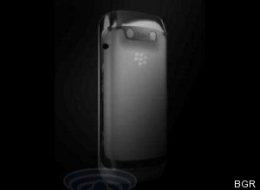
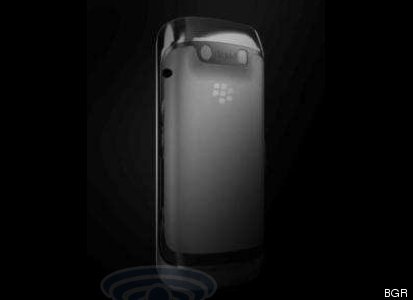
In addition to posting several leaked pictures of the BlackBerry Storm 3, Boy Genius Report shared (unofficial) product specs. The Storm 3, which will reportedly be released around September, "will feature the highest resolution display to ever ship on a BlackBerry smartphone -- a 800 x 480-pixel display and yes, it will have an optical trackpad," writes BGR.
It will also have a 3G mobile hotspot, 5-megapixel camera, and 512 MB of RAM, according to the site's scoop.
BlackBerry's Storm hasn't been well received in the past. Venture Beat calls it "kind of a bust" and Engadget writes, 'We've no doubt that the phone is real at this point, but considering the lukewarm reception the Storm 2 got, we're surprised RIM hasn't pushed harder to get the updated device to market -- only thing we can figure is that the carrier partners keep sending it back for tweaks."
See a picture of what is allegedly the Storm 3 below, then visit BGR for more details.
4:52 PM 0
FIRST LOOK: New BlackBerry Leaked
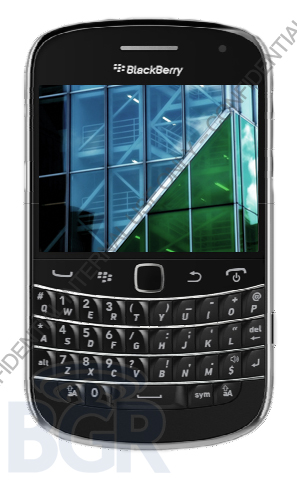
We just got our hands on a crystal clear photo of the BlackBerry Dakota — you know, the device that’s going to sit right at the head of the BlackBerry family dinner table. What about the specifications for the BlackBerry Dakota? What, you thought we’d skimp out on you? How about the famous original Bold styling, HD video recording, NFC, 3G Mobile hotspot, magnetometer and much, much more! Full specs after the break!
- Quad-band GSM/GPRS/EDGE
- Tri-band UMTS
- 5 megapixel camera with HD video recording, flash, and image stabilization
- 4GB of built in storage, 768MB of RAM
- 2.8-inch VGA 640 x 480 capacitive screen
- WiFi b,g,n on 2.4GHz and 5GHz frequencies
- 3G mobile hotspot!
- MicroUSB port
- Bluetooth
- NFC
- Magnetometer
- Accelerometer
- Proximity sensor
- 10.5mm thin
- Launches with BlackBerry OS 6.1
4:46 PM 0
BlackBerry Filters Porn To Avoid Indonesia Ban
Research in Motion Ltd., the Canadian-based maker of the Blackberry, is also ready to set up a server in Indonesia, said Gatot Dewabroto, spokesman for the Ministry of Communication and Information. But RIM's statement did not address that.
Its statement said the company was "fully committed to working with Indonesia's carriers to put in place a prompt, compliant filtering solution for BlackBerry subscribers in Indonesia as soon as possible."
Last week, Indonesia threatened to revoke BlackBerry's license to operate in the nation of 237 million unless it filtered out porn and set up a local server.
A number of countries have expressed national security concerns about encrypted information on users' Blackberrys if RIM didn't come up with a way for governments to monitor them. They have threatend to shut out RIM, whose competitive edge rests on ensuring security to its global users.
Indonesia says RIM earns about $251 million per year from the country's 3 million BlackBerry users.
Dewabrata said the government would meet with RIM officials Jan. 17 to hammer out details.
2:20 AM 0
Android invasion arrives at CES
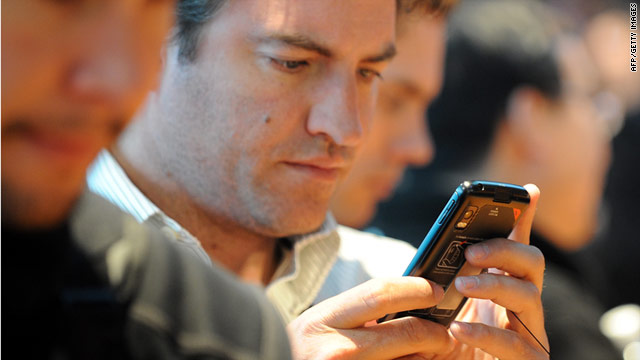
Las Vegas, Nevada (CNN) -- Google doesn't have a booth at the Consumer Electronics Show, but the company's Android software is practically everywhere.
As expected, smartphones maintain a major presence at CES. Despite Microsoft and Research in Motion showcasing their wares, the announcements and excitement is all around Google's Android.
Every new 4G smartphone and tablet announced by the four major cellular carriers at or during CES runs on Android.
Verizon Wireless showcased four smartphones at a news event on Thursday -- LG's Revolution, HTC's Thunderbolt, Motorola's Droid Bionic and a yet-to-be-named offering from Samsung. Touch-screen tablets were also on display with Samsung's Galaxy Tab and Motorola's Xoom.
All six mobile devices, which are slated for release in the first half of the year starting as early as March, run on Android.
"At the same time that we were building out the [4G]area LTE network, the Android operating system really became a reality," Verizon Wireless CEO Dan Mead said in an interview on Thursday.
AT&T announced three smartphones on Wednesday, which take advantage of the carriers' latest network protocol. All three, from Motorola's Atrix 4G, HTC's Inspire 4G and Samsung's Infuse 4G, were Androids.
T-Mobile unveiled two new tablets -- LG G-Slate and Dell Streak 7 -- but no new smartphones at its event. Both tablets were running Android.
During the week of CES, Sprint Nextel announced one new phone, the Evo Shift 4G from HTC, which runs on -- take a guess.
At Research in Motion's booth, the company showcases mainly the PlayBook, alongside BlackBerry phones that are already on the market.
When questioned on phones, RIM co-CEO Mike Lazaridis reiterated that the company is hard at work on the next iteration of BlackBerry. It's based on the operating system that runs the PlayBook, and these "super phones," as he reportedly called them, will have fast dual-core processors inside.
But Motorola Mobility leapt past RIM with an Android phone that packs a dual-core chip. Thanks to the added processing power, the Atrix 4G can dock to a monitor or laptop shell to become a desktop computer running a modified version of Android.
For Microsoft CEO Steve Ballmer's CES keynote, he focused the Windows Phone 7 presentation on applications -- now totally more than 5,500 -- instead of new hardware. Perhaps that's because carrier partners had nothing new to show.
Ballmer concluded the phone portion of his keynote by announcing a new feature coming soon: copy-and-paste, something every major competitor already offers. Needless to say, the crowd was not impressed.
On display at its booth, Microsoft had many of the nine Windows Phone 7 devices that are already available in stores. Though the company didn't announce new phones, a Microsoft mobile director told the Seattle Times that Windows Phone 7 products would be available on Verizon and Sprint by June 30.
"We're going to be a multiple operating-system company," Verizon's Mead said. "We have a strong business relationship with Microsoft. We are interested in that."
The variety of phone types that carriers offer is one area of competition.
"Not only do we have every major operating system," said AT&T Marketing Chief David Christopher at his company's Wednesday conference, "but we have the best smartphones for those operating systems."
Despite these statements of breadth, Android was practically the only act in town this week.
Last year, Google had a table at one of the three main nightly events associated with CES. This year, the company just held a small party and rented a private meeting room.
Google is leaving it to the manufacturers to evangelize its platform.
Expecting to make money from ads, Google provides Android for free to gadget makers to install, tinker with and sell on phones. Microsoft charges partners to use Windows Phone 7 and places limits on how they can alter the software.
RIM doesn't license its software. Nor does Nokia, which didn't announce any new products or host a booth, though the company is here in Las Vegas for various small events. Apple, another major smartphone maker and a longtime holdout from CES, also doesn't license software to vendors.
Palm, like the aforementioned three, develops software only for its own hardware. At CES two years ago, the company made a huge splash with the Pre.
This year, however, Palm has a tiny footprint at displays for its new parent company, Hewlett-Packard. No new phones were shown. (HP is holding an event focused on Palm software scheduled for next month.)
With tablets, Android is clearly rising as a top choice for manufacturers, but it's not alone. RIM has its own, and many companies are announcing tablets with Windows 7.
The version of Android made for tablets isn't ready to be demonstrated live, and only two companies say they have products to support it. Others are showcasing Android tablets, but they are based on older Google software that was made for phones, which obviously have smaller screens.
In smartphones, competitors will likely take the stage later this year to shine the spotlight on themselves. But at CES, Android is the star.
4:29 AM 0
Motorola Atrix: Half Smartphone, Half PC From CES 2011
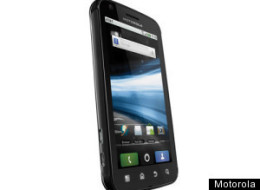
While we've seen combination tablet/laptops before, the Atrix is one of the first smartphone/PCs, largely made possible by NVIDA's dual-core Tegra 2 chip, which lives inside.
PC magazine calls it "an entirely new approach to computing."
The key to the Atrix's abilities lies in it's ability to run two operating systems, Google's Android 2.2 and a customized version of Linux. When plugged into a dock the Atrix can virtually become a desktop PC (attached to a monitor). Motorola is also releasing a Laptop Dock, which the phone plugs into, that's almost as thin as a MacBook Air, according to PC Magazine.
Now for the specs. The Atrix makes such a good computer because it's almost built like one. With 802.11n wireless networking, HSPA+ 4G capabilities, 1GB ram, 16GB of storage space and a MicroSD slot, it virtually is a computer in your pocket.
Perhaps most enticingly, Firefox (one of the Linux system's three apps) supports Flash and other plug-ins. According to Motorola's press release, while in laptop or PC mode Android applications can also be run in a separate window.
10:59 AM 0
Google Android 3.0 Honeycomb Preview Shows Off Gorgeous User Interface (VIDEO)
As seen in a brief demo video, included in a blog post by Google VP of Engineering Andy Rubin, Honeycomb looks snazzy and sophisticated with its "holographic user interface." Venture Beat glowingly says this new UI "looks unlike any version of Android we've ever seen."
Google Talk, a highlight of the Honeycomb operating system, connects tablet and PC users via voice and video chat using the built-in cameras available on many devices expected to run Android 3.0.
Other new features include improved web-browsing, access to Google's eBook library, access to interactive Google Maps in 3D, and tablet-optimized versions of Google products like Gmail and YouTube. Android 3.0 also aims to fine-tune existing Android features, such as multi-tasking, notifications, app access, and more.
Earlier this week, it was predicted that Android tablets, especially those running Honeycomb, would make a big splash at the massive Consumer Electronics Show (CES) in Las Vegas. And so far, devices like the Motorola Xoom have made big waves at CES 2011. "Perhaps," Search Engine Land suggests, "this year's Consumer Electronics Show (CES) should be renamed 'AES' for Android Electronics Show -- given all the handsets and tablets featuring the Google mobile OS that are being shown and rolled out."
To view Google's sneak peek at Android 3.0, watch the video below, courtesy of the Google Mobile Blog.
WATCH: [via Google Mobile Blog]
10:53 AM 0
Samsung Unveils the ‘Lightest, Thinnest’ Smartphone on the Market [CES 2011]

LAS VEGAS, CES 2011 — The very next time I hear the term “iPhone-killer,” I will go absolutely Looney-Tunes nuts. I will tear up telephone books, gargle with raw eggs and Marmite, the whole bit. Seriously.
On the other hand, Samsung really does seem to be taking precise aim at the iPhone 4 with their new Infuse 4G Android smartphone announced yesterday. They’re claiming that, when (if) released, it’ll be the lightest, thinnest phone on the market, and it’ll be equipped with oodles of goodies: a 4.5-inch, “next-generation” Super AMOLED screen (which they say will have better readability in bright sunlight) and a snappy 1.2 ghz processor. And get this — it’ll sit exclusively in the AT&T stable.
That is, if the distinct whiff of vaporware finally evaporates. Samsung hasn’t hinted about any release date yet, and they wouldn’t even let me touch the Infuse during a press event last night, so, heck — it may even have been a hologram.
Samsung also announced availability of a wifi-only version of their popular Galaxy Tab coming this spring.
10:31 AM 0
Hands-On With The Motorola Cliq 2

The Motorola Cliq was the outfits first Android device. Hit? Not as big as the Droid. But nether the less, Moto is back with the successor aptly named the Cliq 2 Android phone for T-Mobile.

Up front is a gorgous screen that slides up to revel a rather nice keypad. It’s a bit cramped but the keys have great tactile response and should be a hit with the slider crowd. The phone itself is satisfyingly quick. This is a dual-core workhorse, but the 1GHz core is more than enough for the tasks that most buyers will throw at it. Motorola’s MotoBlur is still present but not nearly as obtrusive as the first version.
Expect this little guy on T-Mobile January 19th.
2:15 AM 0
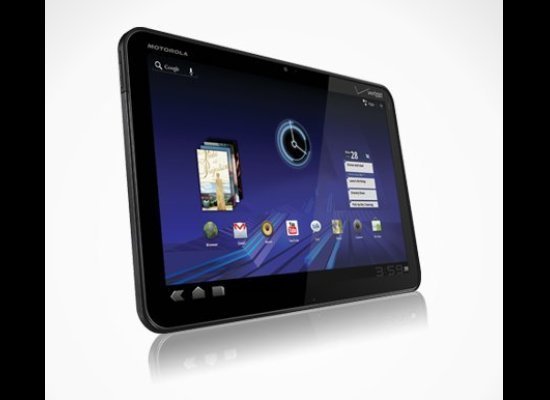
Motorola Xoom Tablet Unveiled At CES 2011

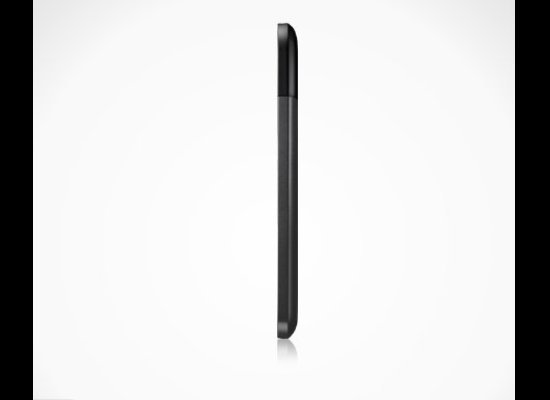
CEO Sanjay Jha showed off the Xoom along with several upcoming smart phones during a news conference Wednesday in advance of the International Consumer Electronics Show in Las Vegas.
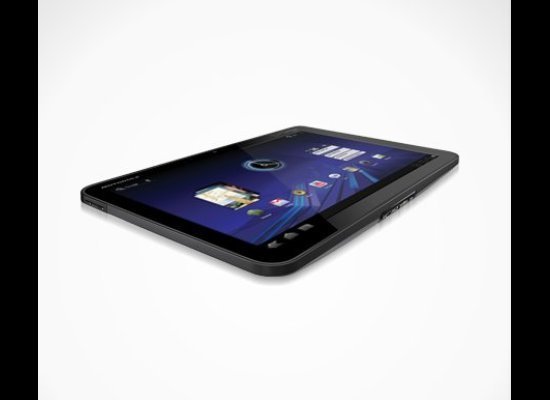
The tablet will come with a 10.1-inch high-definition screen, dual-core processor, front-facing camera for video chatting and a 5-megapixel camera that can take high-definition videos. It will support Flash video content – something Apple Inc.'s iPad does not do – and can work as a Wi-Fi hotspot to connect up to five more gadgets to the Internet.
It will also have Honeycomb, a version of Android that has been designed for the larger touch screens on tablets. Current versions of Android are meant more for the smaller touch screens on smart phones.
In a demo of the software, the Xoom's screen appeared to look more like a computer desktop than a smart phone screen, and Web surfing looked more as it does on a full-sized computer than on a mobile device. Jha said Honeycomb will include a redesigned version of YouTube and the ability to make video calls through Google Talk.
"The user interface, the whole interactive model is designed for the tablet," he said.
The Xoom will begin selling in the first quarter. Initially it will work with Verizon's 3G network and will be upgradeable so it can work on its new 4G network in the second quarter.
Verizon began deploying its new network last year. It uses LTE, or Long-Term Evolution, technology, which is a standard technology behind the next-generation cellular networks, known as 4G. It is designed from the ground up to carry data. Network operators expect not just higher speeds but lower operational costs with LTE.
Motorola Mobility, which is consumer-focused and split from the enterprise-focused portion of Motorola on Tuesday, was not the only company to trot out a Honeycomb tablet Wednesday: T-Mobile USA Inc. and LG Mobile Phones said T-Mobile will start selling the G-Slate in the coming months.
The G-Slate will run on T-Mobile's HSPA+ network, which is an upgraded 3G network that the company refers to as a 4G network because it can achieve 4G speeds.
After initially resisting, the International Telecommunications Union, a standards-setting body, has approved the practice of calling upgraded 3G networks "4G" – something that T-Mobile competitor AT&T Inc. also does.
LOOK:
2:09 AM 0
Motorola Shows Off New Mobile Products

Earlier today, the company unveiled the Motorola Atrix 4G, an Android ()-powered smartphone that will run on AT&T’s new 4G network. Stay tuned to our live coverage below to see what else the company has in store.
 )
)Motorola Press Conference: Live Notes
4:21 – Bill Ogle, Chief Marketing Office for Motorola Mobility, has taken the stage (20 minutes late!) and is talking about the company’s new “Life. Powered” tagline.
4:24 – The new Motorola Atrix 4G ad is showing.
4:25 – Jha has taken the stage and is talking about the Atrix 4G, noting its 1GB of RAM and dualcore 1GHZ processor.
4:29 – We’re now getting a demo of the Atrix 4G, showing how it can be hooked up to a monitor through a docking station and function as a full desktop browser. Flash 10.1 is integrated.
4:33 – There’s also a laptop dock. Connect your laptop to the Atrix 4G, and you can control it from your smartphone.
4:35 – Jeff Bradley, SVP Devices at AT&T mobility has taken the stage.
4:37 – Bradley thinks the docking option is big for both consumers and enterprise — no pricing announced yet.
4:39 – Jha says Bell Canada and Orange UK will also offer Atrix 4G.
4:40 – Jha is now introducing the Motorola Cliq 2 on T-Mobile, avaialable on January 19. Like the original Cliq, in runs on MOTOBLUR and has a slideout keyboard.
4:42 – Jha says there are currently around 2 million MOTOBLUR subscribers.
4:43 – Jha is introducing the Droid Bionic. A new video bills it as “the end of waiting.” Features include 4.3″ screen, HDMI output for big screen view, front- and rear-facing cameras. It’s a 4G phone for Verizon’s network, available in early Q2.
4:46 – Jha has just introduced Motorola Xoom, the first tablet running Honeycomb, the tablet-optimized version of Android. Features of the device include 10.1″ screen, 1080p, front- and rear-facing cameras, and a built-in accelerometer. The device will ship 3G but will be upgradeable to 4G.
4:51 – Jha is describing Honeycomb: tablet-optimized, multi-tasking, widgets updating in real time. He’s now showing off the Google Maps () app (Google () showed a prototype of this last month at D:Dive).
4:53 – Jha calls Xoom “the most competitive tablet on the market.” We presume he means competitive to the iPad.
4:55 – That’s a wrap — impressed with Droid Bionic and Xoom! Stay tuned for posts about them on Mashable ().
Source: Mashable
1:45 AM 0

Five Best Mobile Personal Finance Tools
It's easy to convince yourself to spend and save responsibly when the numbers are right in front of you, but it's a different story when you're on-the-go. These five great mobile personal finance tools keep your money goals nearby at all times.
Photo a composite of images by neernijus and mellowr.
Smartphones have brought nearly every aspect of desktop computers to your pocket; it only makes sense they'd bring money management, too. Earlier this week we asked you to share your favorite mobile personal finance tool. Now we're back to highlight the five most popular options.

Popular web-based personal finance tool Mint has an equally as popular mobile application for Android and iOS devices. It sports the same simple design as Mint's main site and makes it easy to track your spending, receive alerts about bills and budget issues, and monitor your savings goals. It's polished, the graphs are easy to read, and the total-overview that Mint provides helps keep you on top of your personal finances in ways other tools don't.

Pageonce isn't only about personal finance, but it does personal finance well, and it's available for nearly every mobile platform around. On top of a web-based interface, they have highly polished apps for Android, iOS, BlackBerry, and Windows Mobile (including the newly released Windows Phone 7). It's easy to get real-time updates via email or push notifications on your phone, set alerts to warn you about impending bills or overspending, and view all of your financial stats in eye-catching charts and graphs.

EasyMoney is an Android-only personal finance manager that includes a home screen widget for speedy transaction inputs, bill notifications, graphs to help you analyze and chart your past and future spending, and a host of small but very useful features like the ability to split transactions between multiple categories. Easy Money also includes a tool for photographing receipts and importing data as well as a checkbook register and easy import/export to .CVS files. EasyMoney offers a 30 day-trial if you're on the fence about spending $10 on the app (consider also, many of the features in EasyMoney are paid upgrades on similar applications).

Pocket Money puts a sweeping view of all your accounts and transactions right on your iPhone or iPad. You can manually enter transactions, create repeating transactions based on cycles or dates, create custom filters to view your money the way that is most useful to you, and more. On top of the plethora of features in the stock app you can expand the feature set with in-app purchases like the $0.99 Photo Receipts plugin that allows you to photograph your receipts and import the transaction data off them. Pocket Money has a companion desktop application available for Windows, Mac and Linux—a nice break from the common pattern of iOS apps having Mac-only desktop companions.

ProOnGo is the most distinctly business-oriented tool in this week's Hive Five. You could use it as a personal finance manager if you desired but the feature set is weighted heavily towards business users who need to track things like automotive mileage, business-related expenses, and generate reports for tax purposes and submission to their company. The basic package runs $0.99/month and is limited to manual entires and expense report generation, the premium package runs $4.99/month and includes web-based access, backups, custom spreadsheets, and synchronization to your American Express business card.
Photo a composite of images by neernijus and mellowr.
Smartphones have brought nearly every aspect of desktop computers to your pocket; it only makes sense they'd bring money management, too. Earlier this week we asked you to share your favorite mobile personal finance tool. Now we're back to highlight the five most popular options.
Mint (Android/iOS, Free)

Popular web-based personal finance tool Mint has an equally as popular mobile application for Android and iOS devices. It sports the same simple design as Mint's main site and makes it easy to track your spending, receive alerts about bills and budget issues, and monitor your savings goals. It's polished, the graphs are easy to read, and the total-overview that Mint provides helps keep you on top of your personal finances in ways other tools don't.
Pageonce (Cross-Platform, Free)

Pageonce isn't only about personal finance, but it does personal finance well, and it's available for nearly every mobile platform around. On top of a web-based interface, they have highly polished apps for Android, iOS, BlackBerry, and Windows Mobile (including the newly released Windows Phone 7). It's easy to get real-time updates via email or push notifications on your phone, set alerts to warn you about impending bills or overspending, and view all of your financial stats in eye-catching charts and graphs.
EasyMoney (Android, $9.95)

EasyMoney is an Android-only personal finance manager that includes a home screen widget for speedy transaction inputs, bill notifications, graphs to help you analyze and chart your past and future spending, and a host of small but very useful features like the ability to split transactions between multiple categories. Easy Money also includes a tool for photographing receipts and importing data as well as a checkbook register and easy import/export to .CVS files. EasyMoney offers a 30 day-trial if you're on the fence about spending $10 on the app (consider also, many of the features in EasyMoney are paid upgrades on similar applications).
Pocket Money (iOS, $4.99)

ProOnGo (Cross-Platform, Starting at $0.99/Month)

12:39 AM 0
The 10 most significant gadgets of 2010
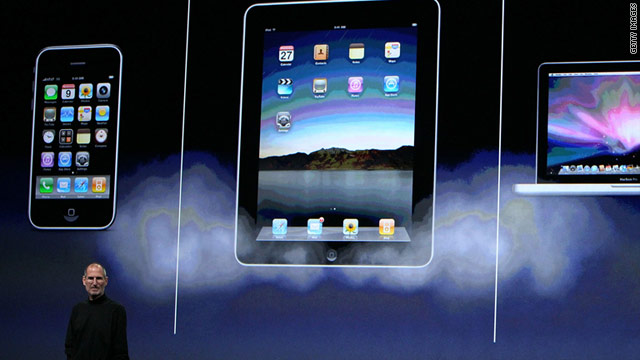
(WIRED) -- When this year began, we were feverishly speculating about an Apple tablet, looking forward to 3-D TV sets, and optimistically waiting for the end of the cable companies' cruel grip on our wallets.
We had to settle for one out of three. While manufacturers did release a handful of 3-D TVs, there's just not enough content (either on cable or Blu-ray) to justify purchasing one yet. The heavy, expensive glasses you need to buy don't make the proposition any more attractive, either.
And as for getting all our video from the sweet, ever-flowing bounty of the internet? Sure, we still do that -- when we're at work. But at home, internet TV is still struggling to stand on its own. The gadget we'd pinned our hopes on, the Boxee Box, is unfinished and buggy. Google TV is hampered by the unwillingness of the TV networks to play ball. Apple TV remains locked into its own little iTunes-centric world.
So that leaves the Apple tablet. If you'd told us in December 2009 that we'd be using the word "iPad" every day without giggling, well, we would have giggled at you. But there it is: There's no getting around the fact that the iPad, silly name and all, has completely and successfully redefined what a "tablet computer" could be.
But the iPad was far from being the only big gadget news of the year. E-readers, cameras, and even exoskeletons made huge strides in 2010.
Here, then, are the 10 gadgets that were most significant in 2010.
10. Kindle 3
With a brighter, higher-contrast screen and a svelte, understated design, Amazon has finally nailed the Kindle. For now, this is the e-reader to beat.
There's still room to debate the virtues of E Ink (long battery life, paperlike readability) versus LCD screens (bright colors, no need for an Itty Bitty Book Light in the dark), but on balance, if it's reading you'll be doing, theKindle is tops.
The company removed further objections to would-be purchasers by dropping the price to $140 (for the Wi-Fi edition; with free 3G wireless it costs $190) and continuing to expand its collection of e-books. And, of course, it's hard to visit Amazon.com without being blasted with offers to buy a Kindle -- so it's no wonder that it's become the company's top-selling product.
The Kindle can even read PDF files and (with some conversion help) the open-source EPUB format. It's surprisingly versatile. -- Dylan Tweney
9. Canon S95
You might be thinking, "What's a point-and-shoot doing on a top-10 list?" That's how good Canon's PowerShot S95 is: It's a camera that gives amateur shooters pro-baller status.
This pocketable cam packs a 10-megapixel sensor, a 9.5-mm (diagonal) sensor, the latest DIGIC 4 processor (which is lightning fast), optical image stabilizer, face detection, the ability to shoot RAW images and HDMI output.
Most important is the cam's glass. It's got a 28-105mm equivalent lens, so there's a nice wide angle at the short end, perfect for large group shots and landscapes. -- Mark McClusky and Brian Chen
8. Samsung Galaxy Tab
Call this the surprise hit of the season: The first Android-based tablet to be a credible contender to the iPad, the Galaxy Tab is a remarkably usable tablet that's got a lot going for it. It's considerably smaller than the iPad, with a 7-inch diagonal screen compared to the iPad's 9.7 inches. But with an almost identical 1024 x 600 pixel resolution, it's got just as much screen real estate -- and it's a good deal more portable.
Add the full Android market, a decent camera, the ability to turn itself into a mobile hotspot, and a removable microSD card slot, and you've got bragging rights that your Mac-loving friends can't match.
And although Steve Jobs sneered at the diminutive size of 7-inch tablets, there's clearly a market for them: The Galaxy Tab sold 1 million units in its first two months. -- Dylan Tweney
7. MacBook Air
Steve Jobs called the new MacBook Air the future of computers, and we like where this is going. Coming in 11- and 13-inch flavors, the MacBook Air weighs less than 2.5 pounds, with a wedge shape that thins down to just a tenth-of-an-inch.
Most importantly, it ships with a flash drive, which makes the Air a surprisingly zippy performer for its size. And at an attractive starting price of $1,000, who wouldn't consider one of these as their next notebook? We look forward to the wave of low-priced, ultrathin laptops coming from competing manufacturers in the coming years. -- Brian Chen
6. iPhone 4
Tainted by early reports of a faulty antenna, Apple's latest iPhone was perhaps the most controversial product of the year, but nonetheless a resounding crowd pleaser.
Reviewers sang praise for the device's gorgeous "retina" display, which makes reading from a digital screen as pleasing as a glossy magazine page. Add to that a front-facing camera for video chat, a fast A4 processor and iOS 4, which enables multitasking, and the iPhone 4 is a killer upgrade.
Its debut was made more dramatic than usual by the accidental loss -- and subsequent publication on
Gizmodo -- of a late prototype, several weeks before the phone's official launch. The consumer electronics industry is notoriously tight-lipped about its upcoming products, and no company exerts tighter control of its messaging than Apple. Gizmodo's scoop was a rare exception to the rule.
Despite the leak, and despite claims about a "death grip" causing the phone to drop calls, the iPhone 4 was Apple's hottest iPhone yet, selling 14 million units in just one quarter. -- Brian Chen
5. Sprint Evo 4G
It's bigger, beefier and more badass than almost any other phone we've tested this year. And thanks to its 4G connection, 4-inch screen and ability to beam out a Wi-Fi signal, the Sprint Evo makes an excellent traveling companion.
Granted, Sprint's 4G network isn't available everywhere in the United States yet, but the company has been lighting it up in an increasing number of metro areas. When it works, it delivers enough bandwidth that you might be tempted to cut your wired broadband connection.
The Evo's downsides include its bulk (though some people actually like that) and disappointing battery life. -- Dylan Tweney
4. Windows Phone 7 on Samsung Focus
In the wake of the iPhone revolution, Microsoft's Windows Mobile OS tanked in market share, and the software giant decided in 2008 to scrap everything and start over.
The company hired new managers, opened new lab facilities and shuffled around its entire mobile team to create a new Windows phone OS in a year. The result was Windows Phone 7, Microsoft's brand-new entry in the smartphone game.
Based on a fresh tile-based interface, Windows Phone 7 is an impressive start. It shines brightly on the lightweight Samsung Focus smartphone, which has a beautiful AMOLED screen and a solid overall construction.
Microsoft is pinning its mobile hopes on Windows Phone 7. If the Focus is any indication, it's got a good shot at getting back in the game. -- Brian Chen
3. Microsoft Kinect
Microsoft's Xbox add-on, formerly known by its code name of "Project Natal," may have been a latecomer to the motion-sensitive gaming category. But when it arrived, the Kinect blew Sony and Nintendo's wand-waving accessories out of the water.
Combining a visible-spectrum camera and an infrared sensor, the Kinect offers the most advanced real-time 3-D scanning and rendering we've seen in a commercial product. It's also got built-in face recognition. The upshot: Your Kinect can recognize you, and you can control it simply by waving your hands and moving your body.
The possibilities are even richer for game developers and hackers, who are already figuring out how to incorporate the Kinect's features into eye-popping demos and surprisingly intelligent robots. -- Dylan Tweney
2. Berkeley Bionics eLEGS
The feel-good gadget story of the year, without a doubt, was a lightweight exoskeleton from Berkeley Bionics that can help paraplegics walk again.
At the company's press conference, a person who'd been paraplegic for 18 years demonstrated the eLEGS by walking around onstage.
Her smile shows you everything you need to know about this remarkable invention.
You probably can't buy one, as it will cost around $100,000. But it's the sort of thing that a hospital or physical therapy clinic might buy to help people do rehabilitation exercises, which can be especially beneficial for people who were recently injured. That's because the eLEGS can help them get started on load-bearing, upright, walking exercises while they still have the muscle memory for walking.
The eLEGS exoskeleton is not the only such device: A company called ReWalk makes a similar, $100,000 gadget that appeared on Glee this month. -- Dylan Tweney
1. iPad
Thanks to Apple's iPad,2010 was the year of the tablet. The 9.7-inch touchscreen wonder created a brand-new product category that made digital content more attractive than ever.
The iPad checked off all the boxes where previous tablet computers completely missed the mark. Unlike its stylus-driven predecessors, the iPad offers a finger-friendly interface that people of all ages can learn in a few seconds, requiring zero antivirus software and barely any maintenance (apps update themselves with the tap of a button). In other words, it was the first true tablet -- not just a PC with a touchscreen skin.
The market reacted strongly. Publishers lined up to reinvent their magazines and newspapers for the shiny device, programmers embraced another new digital frontier to make innovative apps and games, and several competing manufacturers announced plans to whip up tablets of their own.
More controversially, the iPad extended Apple's dominion over its phenomenal media distribution channel, the App Store, for better and for worse. The tablet's beautiful 9.7-inch screen opens new possibilities for content creators to make money by selling apps through the App Store, but every so often Apple cracks the whip, demanding programmers to follow the company's vaguely stated but stringently applied rules. In short, the iPad unlocked an exciting opportunity for digital innovation, while also posing an alarming threat to creative freedom.
Nonetheless, the early numbers suggest customers are thrilled. Apple sold 4.2 million iPads during the tablet's first quarter of existence, claiming the title of fastest-adopted gadget in history. -- Brian Chen
4:46 AM 0
An iPhone Lover’s Take On The Nexus S

There’s a scene in Iron Man 2 in which Justin Hammer (Sam Rockwell) shows off the mechanical soliders he has been working on — his would-be “Iron Man-killers”. Unfortunately, while they may look somewhat impressive, his machines malfunction and the demo goes horribly awry. His knock-offs are junk. This scene reminds me a lot of what the first Android phone, the G1, was like when compared to the iPhone. Luckily for Google, things have improved substantially since then — and without the help of a Russian Mickey Rourke. Well, presumably anyway.
We’ve already done a big, comprehensive review of the Nexus S, the latest and greatest Android device. But as I like to do (see: the bottom of this post), I’m going to look at it from the angle of an iPhone diehard. After all, this is widely considered to be the best Android device yet. So will it be enough to make any iPhone user jump ship? And since this is currently the only device running Android 2.3 “Gingerbread”, what’s the overall state of the OS?
First of all, the Nexus S is a great smartphone. I’ve been using it for a little over two weeks now and I think I can safely say that in a world where there was no iPhone, this is the device I would use. While I like a number of fundamental things about Windows Phone more, Android is more mature. And more importantly, the ecosystem is far more built-out. Plus, the Google apps on the device are enough to entice anyone.
Previously, I’ve held firm on my belief that the Nexus One was the best Android phone out there. In my mind, this was true even as dozen of other Android phones came to the market more recently. The Nexus One was the best because it was pure Android. Unlike the Droids or the EVO, it wasn’t loaded up with crapware from the carriers. And they weren’t able to manipulate the core experience of Android with their awful skins. The Nexus S is the second “pure Android” phone. But it’s faster. And so it takes the crown from the Nexus One.

Hardware
Having said that, I still prefer the build quality of the Nexus One (HTC-built) a bit more than the Nexus S (Samsung-built). Like the Windows Phone model I used (a Samsung Focus), the Nexus S feels a bit too plastic-y for my taste. It’s the same reason I liked the original iPhone design more than the iPhone 3G and 3GS. The plastic backs just feel cheap to me. And they’re awful to try to remove. It feels like I’m ripping the phone apart each time.
I am glad the Nexus S doesn’t feature that stupid ball that many Android phones (including the Nexus One) used to like to include. And the main feature of the device, the screen, is clearly nicer on the Nexus S versus the Nexus One. (Though the AMOLED display is still far too hard to read in sunlight, in my opinion.)
I’m not sure why the Nexus S feature a small nub that jets out of the back. I assume it’s for ergonomic reasons, but it seems pointless and looks silly, in my opinion.
The camera is great on the Nexus S. Not iPhone 4-great, but I’d say the second-best smartphone camera I’ve seen yet. Plus, the Nexus S also has a front-facing camera, something the Nexus One did not.
This is the fastest Android device I’ve used yet, but it’s not clear if that has more to do with the hardware specs (1 GHz Hummingbird processor) or because of Android 2.3. Scrolling seems smooth and I haven’t noticed any major lag aside from a few apps, which for now I’ll assume is more their own fault.
The touchscreen on the Nexus S also easily seems to be the best I’ve used on an Android phone so far. That has been one of the little things that the platform hasn’t been able to nail when compared to the iPhone. But here, they come very close. (Again, it’s hard to know if that’s the hardware or Android 2.3 in particular — likely a combination of the two.)
Sadly, perhaps the coolest hardware feature of the Nexus S, Near Field Communication (NFC), doesn’t have much use yet. But when it does, that could be huge for things like payments. Something tells me Apple might be deploying that feature as well in the future.
The few calls I’ve made on the Nexus S were rock solid. Unlike the iPhone, I didn’t experience any dropped calls, even when going indoors. Of course, the Nexus S is on T-Mobile while the iPhone is on that carrier that shall not be named. So it’s hard to compare the two.
The battery life of the Nexus S is pretty good, but not great. While it’s nowhere near as bad as the EVO, the Nexus S still seems to use way too much juice when it’s idle. Others have noticed this as well. As far as I can tell, this is a result of certain apps running the background. Android 2.3 brings improved app management, but that’s not a good sign if it’s still not killing processes in a way to preserve battery life.

Software
And let’s talk about the Android 2.3 Gingerbread software. While we had heard this past Summer that that Android team was “laser-focused” on improving the user experience of Android with 2.3, it would appear that this work has been pushed until Android 3.0 instead. Why do I say that? Because Android 2.3 really doesn’t look that much different from Android 2.2 at all.
Sure, there’s a little bit of polish here and there, but overall it’s the same Android you all know and tolerate.
To me, the key to Android 2.3 is that it does seem to run significantly smoother than its predecessors. And that’s saying something because Android 2.2 ran significantly smoother than Android 2.1. The Android team is clearly making good improvements in this regard quickly. Overall, the system is still not iPhone 4-smooth. But it’s getting very close.
In their review, Mike and Jason talked a bit about the keyboard improvements with Android 2.3. There is no question that the keyboard is better. But it’s still well behind the iPhone keyboard, in my opinion. It’s also behind the Windows Phone keyboard. It’s a little baffling to me that Google still hasn’t nailed this feature that is so key (or why they just haven’t bought a company like Swype).
And it’s not just typing. It’s the fact that they software keyboard often pops up over key portions of apps and doesn’t do a good job of directing you to the next input box which is probably being covered. I’ve seen this happen time an time again in Android. And 2.3 is sadly no different.
Sure, many of my issues throughout the years with Android may seem like little nits (and many are), but they are annoying little aspects that would stop me from switching from the iPhone to an Android phone. Apple is very good at nailing the small stuff. Google, it seems, is still working on overall larger polish and hasn’t moved on to many of the little things. Hopefully by Android 3.0 we can expect some of that.
The Google-made apps continue to be the killer apps of Android. Gmail, in particular, continues to be better than it is on the iPhone simply because there is no native iPhone Gmail app (though the rich mobile web version is very good). Things like Navigation and Voice Search also give you capabilities that you can’t get on the iPhone. Google Voice finally just came to the iPhone, but it’s still much better on Android because it’s seamlessly integrated into the entire system.

And then there’s the newest version of Google Maps. This is perhaps my favorite aspect of Android now. The latest version, which includes 3D buildings and the ability to spin maps around, runs loops around the iPhone version of Maps (which also uses Google Maps).
With the speed of Nexus S + Android 2.3, games seem to run more smoothly than ever on Android. I’ve tested out several popular games like Angry Birds, SliceIt, and Fruit Ninja, and all basically look and perform like they do on iOS. I will say that there is some lag though on games like Fruit Ninja for no apparent reason. Also in that game, it drives me insane when I swipe my finger across the screen and hit the soft home button on the Nexus S, dumping me out of the app.
A couple of the apps I use the most on my iPhone: Twitter and Foursquare, still lack to polish of their iOS counterparts. Twitter, even though they’ve made it look more like the iOS version, is still far behind it in terms of usability. The same is true with Foursquare. It just feels slower and I find myself hesitant to use it because of that. Instead, I dig for my iPhone. That’s not a good sign for Android.
The Android browser, meanwhile still suffers from weird zooming issues. Whereas when you double tap an area in Mobile Safari and the iPhone gracefully zooms in, on Android’s browser, it seems to stutter-step in. Further, I don’t get why Google still includes those silly plus and minus soft buttons for zooming into webpages. I get that it was for one-handed use, but you should be able to double-tap an area with your thumb to zoom just like you can on the iPhone.
All in all, the browser, while a million times better than the awful browser bundled with Windows Phone, still lags behind Mobile Safari.
My favorite part of the whole package from a software perspective may be the “off” animation. You click the side power button, and the screen shuts off as if it were an old television set. Pretty cool.

Intangibles
When Jason heard I was getting a Nexus S to try out, he (half) jokingly asked if I had already decided what I wouldn’t like about it. The truth is that I do try to go into using these devices with an open mind — but I also realize it’s an inherently biased one. I’ve been using the iPhone for well over three years now. I’m so accustomed to doing certain things on it that it is hard to try and do some things the “Android way”.
But I’m well aware of that. And I’ve logged plenty of Android hours. Sure, I’m more accustomed to the iPhone, but I could switch anytime I wanted to. But that’s the thing, I don’t want to. The iPhone experience is still overall a better one in my mind. It’s that simple.
Nexus S and Gingerbread continue the trend of Google improving Android as a steady pace, but they are still behind where Apple is with iOS 4.2 and the iPhone 4. This is true in both hardware and software. On paper, the devices line up nicely. In use, they still do not. As I said above, there are still too many small things that the iPhone nails that Android doesn’t even seem to think of at all. Google still seems more focused on getting the larger areas (like the Market) up to speed. Maybe that will change with Android 3.0 before the iPhone 5 hits, maybe it won’t.
Again, the Nexus S is a great device. And I would highly recommend it to any and all people who want an Android phone. One of the most striking things about it to me is just how much better it is than the crappy Android experience on devices like the EVO and Droid 2, compliments of the carriers.
In fact, it’s hard for me to believe that anyone would choose an Android device other than the Nexus S. Having a physical keyboard is the only excuse I can somewhat see. Maybe Verizon’s network — maybe. Otherwise, this is absolutely the one to get. Don’t buy the bullshit Verizon Droid marketing.
Droid doesn’t does. This does.
Well, it does against everything except the iPhone 4, of course. Maybe Russian Mickey Rourke can help with that.
4:28 AM 0
HTC Thunderbolt Photos Leak Ahead of CES

Besides the humongous screen, other interesting features of note is the kickstand on the back with Google branding and the slightly disappointing fact that, according to Droid Life which came into possession of 12 images of the device, it will only feature a single core CPU. It’s also worth noting that the device is visually nearly identical to the HTC Desire HD.
We’ll likely find more about the device next week at CES. As far as the significance of LTE (Long Term Evolution) goes, it’s the widely adopted 4G-ready mobile network standard that will finally enable mind-numbing data transfer speeds (in its current state, it theoretically offers peak download rates of 326.4 Mbit/s) on our mobile phones.

2:35 AM 0
Android Apps Double to 200K in 2 Months [REPORT]

Apparently the effort to expand the Android Market to more than 20 countries is paying off. It took the store almost two years to get to the 100,000-app mark, but just 63 days to double that.
With that 200,000-app milestone under its little green robot belt, the Android juggernaut can boast about its plethora of apps as it basks in the glow of being the top-selling smartphone operating system.
Regardless of its market position, according to Androlib, more than 2.5 billion Android apps have been downloaded since its opening in October, 2008. That’s phenomenal. However, the Android Market has a long way to go if it wants to match the variety of Apple’s App Store, now with more than 300,000 choices.
One thing’s for sure: Android is popular among Mashable readers. In our poll earlier this month, Android devices were the most wanted, towering over second-place iOS devices by 41.2% to 30.6%.
2:29 AM 0
Millions overpay for mobile use – Which? survey

Millions of mobile phone users regularly pay more than they need to for their phone usage, according to the consumer body Which?.
A survey by Which? Mobile, released today, found that an estimated 10 million users pay for extra calls, texts and data usage on top of their monthly line rental.
The consumer group said the findings were "not surprising" as 6 million people either did not know or had only a vague idea of their monthly limit for call minutes. Five million were unsure of their text and data allowances. This is despite seven in 10 people claiming to check their mobile bill at least once a month.
Which? said consumers could save money by switching to a tariff that better suited their phone usage, but 18 million people had never switched mobile phone provider.
Tom McLennan, head of Which? Mobile, said: "You could be spending hundreds of pounds more than you need to on your mobile every year if you're not on the right tariff.
"If you regularly spend more than your line rental, check your bill to see where you're incurring the extra charges as you may be able to save money by moving to a tariff with more minutes, texts or data.
"If you never go over your agreed line rental, it's because you're not using up your allowance so you may be able to save money by finding a cheaper tariff that reflects your usage."
Mobile phone companies have faced criticism for anti-competitive tactics that effectively lock customers in to long-term rolling contracts. They also generate more complaints than any other industry, leaving 4.1m people unhappy with their service every year.
Official figures showed that last year 3.3m customers had to wait three months or more for their phone or broadband provider to resolve a problem.
Parents have complained that mobile operators refuse to block calls when their teenage children exceed agreed limits.
The Office of Fair Trading has attempted to put rules in place that would allow customers to shop around, but according to consumer groups it has been defeated by the main players which offer inducements to maintain their customer base.
A network sharing scheme between the French-owned Orange and German T-Mobile network was referred to the European authorities earlier this year.
The OFT said it was minded to block the deal but later withdrew its complaint after the two mobile operators agreed to modify their plans. The merger was approved in February and the company adopted the name Everything Everywhere in May.
The Which? survey questioned 1,271 adults aged 16 or more, but teenagers are even more likely to exceed their agreed monthly usage, according to Ernest Doku, communications expert at uSwitch.com.
He said: "It's generally difficult and expensive to quit a contract completely before the end of the term – you will usually be made to pay for the remaining months. But there is some wiggle room: most mobile phone companies will allow you to switch to another of their tariffs if you are exceeding the limits set by your existing tariff every month."
Alternatively he suggested that users opt for a "pay as you go" mobile or a provider that flashes up a warning on the mobile screen if they are about to exceed their inclusive minutes, download amounts and texts.
Tesco takes this idea one step further by cutting off the service once the agreed usage level has been reached.
2:10 AM 0
Next generation of Android media player revealed
Developers have gotten their hands on an alpha version of what appears to be Android's upcoming media player.
 When it comes to media management and playback, Google's (GOOG) Android lags behind Apple's (AAPL) iTunes ecosystem. For those who like to have their music and video managed by an application, Google simply doesn't have a good answer to iTunes.
I currently use DoubleTwist on Android, which is a third party app that allows me to manage my music with iTunes on my computer. It also has a slick interface and allows for over-the-air sync, which should be in both Apple and Google's products.
Back in May at Google I/O, VP Vic Gundotra demoed what appeared to be a pretty impressive cloud-based music system based on some software they bought called Simplify Media. Here's the demo below:
Here we are, seven months later and Google's media software hasn't changed. Certainly nothing like what was demonstrated has even been mentioned since Google I/O.
Yesterday, however, some Android software that looks like the app demonstrated leaked. According to people who've used it, it works well for organizing music but the streaming side doesn't work well at all.
So, is this just the leak of the old software or does this mean that Google is readying an update to the Android media player?
Google has been working on a Google Music ecosystem for months, even securing the rights to stream music from lockers online. Previous speculation put a Google Music launch at the end of this year, which is rapidly approaching and likely to pass before an announcement is made.
Meanwhile, Apple is rumored to be working on a similar service which will be served out of its new North Carolina data center.
I currently use DoubleTwist on Android, which is a third party app that allows me to manage my music with iTunes on my computer. It also has a slick interface and allows for over-the-air sync, which should be in both Apple and Google's products.
Back in May at Google I/O, VP Vic Gundotra demoed what appeared to be a pretty impressive cloud-based music system based on some software they bought called Simplify Media. Here's the demo below:
Here we are, seven months later and Google's media software hasn't changed. Certainly nothing like what was demonstrated has even been mentioned since Google I/O.
Yesterday, however, some Android software that looks like the app demonstrated leaked. According to people who've used it, it works well for organizing music but the streaming side doesn't work well at all.
So, is this just the leak of the old software or does this mean that Google is readying an update to the Android media player?
Google has been working on a Google Music ecosystem for months, even securing the rights to stream music from lockers online. Previous speculation put a Google Music launch at the end of this year, which is rapidly approaching and likely to pass before an announcement is made.
Meanwhile, Apple is rumored to be working on a similar service which will be served out of its new North Carolina data center.
2:00 AM 0
New Android Music App Leaked (Video)

It looks like the Android music app will be getting a significant update in the not too distant future, it was previously shown off at the I/O 2010 conference earlier this year and now the guys over at the XDA have a test build of the new Android music app.
You can see it in action in the video below, and you can also try it out, although it is an early build and quite a bit far off the final version that will be released.
1:15 AM 0
HTC EVO Shift 4G Coming To Sprint January 9th?
We have been hearing quite a bit about the HTC Evo Shift 4G recently, with a few different photos appearing on the web, and now it seems that they EVO Shift 4G may be about to launch on Sprint.
The rumored launch date for the HTC EVO Shift 4G is the 9th of January 2011, and it is reported to cost $150 on a two year contract, and we are expecting to here more about it at CES 2011.

So far we know that the HTC EVO Shift 4G features a slide out QWERTY keyboard, a 3.7 inch touchscreen display, an 800MHZ Snapdragon processor, 512MB of RAM and a five megapixel camera.
As soon as we get more information on the official launch date of the HTC EVO 4G we will let you guys know.
Android and Me via TFTS
The rumored launch date for the HTC EVO Shift 4G is the 9th of January 2011, and it is reported to cost $150 on a two year contract, and we are expecting to here more about it at CES 2011.
So far we know that the HTC EVO Shift 4G features a slide out QWERTY keyboard, a 3.7 inch touchscreen display, an 800MHZ Snapdragon processor, 512MB of RAM and a five megapixel camera.
As soon as we get more information on the official launch date of the HTC EVO 4G we will let you guys know.
Android and Me via TFTS
1:10 AM 0
Subscribe to:
Posts (Atom)
