


Showing posts with label twitter. Show all posts
Showing posts with label twitter. Show all posts
Twitter Puts Spotlight On Secret F.B.I. Subpoenas

Even as Web sites, social networking services and telephone companies amass more and more information about their users, the government — in the course of conducting inquiries — has been able to look through much of the information without the knowledge of the people being investigated.
For the Twitter request, the government obtained a secret subpoena from a federal court. Twitter challenged the secrecy, not the subpoena itself, and won the right to inform the people whose records the government was seeking. WikiLeaks says it suspects that other large sites like Google and Facebook have received similar requests and simply went along with the government.
This kind of order is far more common than one may think, and in the case of terrorism and espionage investigations the government can issue them without a court order. The government says more than 50,000 of these requests, known as national security letters, are sent each year, but they come with gag orders that prevent those contacted from revealing what the agency has been seeking or even the existence of the gag orders.
“It’s a perfect example of how the government can use its broad powers to silence people,” said Nicholas Merrill, who was the first person to file a constitutional challenge against the use of national security letters, authorized by the USA Patriot Act. Until August, he was forbidden to acknowledge the existence of a 2004 letter that the company he founded, the Calyx Internet Access Corporation, received from the F.B.I.
Mr. Merrill is now free to speak about the request, but part of the gag order remains in place, and he is still barred from discussing what information he had been asked to provide. As a result, he said, before he gives a talk he consults a six-page guide prepared by his lawyers at the American Civil Liberties Union to be sure that he complies with the order to avoid risking a punishment of five years in prison.
The government cites national security as the reason the contents of the letters — even their existence — are kept secret. The F.B.I. is trying to prevent plots as they are being hatched, according to Valerie Caproni, the general counsel of the agency, and thus needs stealth.
In the case of a small Internet service provider like Calyx, which was located in downtown Manhattan and had hundreds of customers, even mentioning that the F.B.I. had been sniffing around could harm an investigation, she said, especially if “the target is antsy anyway.”
Mr. Merrill, a 38-year-old from Brooklyn who studied computer science and philosophy, said he created Calyx in 1994 when it was “really pretty easy, there wasn’t really any competition.” His clients included “dozens of nonprofit organizations and alternative media outlets.”
Mr. Merrill challenged the constitutionality of the letter he received in 2004, saying the request raised “red flags” of being politically motivated. As a result of his suit and two later ones, the law governing the letters has been overturned and then revised by Congress.
In 2007, the F.B.I.’s inspector general found that the agency had abused its own guidelines by including too many peripheral people in its searches. The letters now receive the “individualized scrutiny” of the agents who are filing them, Ms. Caponi said.
All sides agree that it has become significantly easier to challenge the letters’ requests as well as their secrecy. At the moment, there are no new challenges in the court system, the government and the A.C.L.U. say.
The program, whose use has “ticked up” a bit in recent years, Ms. Caproni said, is humming along. She added, however, that the government had become more selective about the types of companies to which it sent letters. “All other things being the same, one of the things investigators think about is, ‘Who are we serving this? Are they comfortable with this?’ ” she said. “Most of these N.S.L.’s are filed on large companies. Why would they want to disclose that? Most companies view it as good corporate citizenry.”
One critic of the law, former Senator Russ Feingold, said in a statement that it was long past time for Congress “to rein in the use of national security letters.”
“This is not a partisan issue,” Mr. Feingold said, “it is about the legislative branch providing an adequate check on the executive branch. Republicans advocating limited government should take a close look at these statutes and consider supporting changes.”
Mr. Merrill argues that the blanket gag orders have prevented a full public debate on the subject. He himself largely left the I.S.P. business in 2004, independent of his legal case, and only now has returned to hosting a couple of clients as part of a nonprofit project, the Calyx Institute, which aims to study how to protect consumers’ privacy.
Regarding the news about Twitter, he wrote in an e-mail: “I commend Twitter’s policy of notifying their customers of government requests for their private data and for their challenging and subsequently removing the gag order. This is a great example of the government’s misuse of secrecy provisions and of exemplary privacy ethics on behalf of Twitter.”
Ms. Caproni, who has testified before Congress about the program, said that it had been more than amply debated. “People at the A.C.L.U. and the press” think the letters are “a bigger deal than the companies.”
To one of Mr. Merrill’s A.CL.U. lawyers, Jameel Jaffer, the smooth operation of the system is a sign that it is not working. The privacy rights at stake are not those of the companies who hold the information, Mr. Jaffer said, but “about people whose records are held.” And those people should be told, he said.
“People used to be the custodians of their own records, their own diaries. Now third parties are custodians of all that,” he said. “Everything you do online is entrusted to someone else — unless you want to go completely off the grid, and I’m not even sure that is possible.”
9:09 AM 0
Twitter Users Publicly Mock EU Officials During EU Meeting
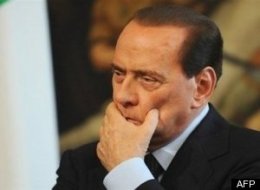
European Union officials fell into a trap after scrolling tweets from the social networking site on big screens at a meeting of EU leaders in Brussels this week.
Twitter users saw opportunity and used keywords to post tweets Thursday mocking scandals involving Italy's Prime Minister Silvio Berlusconi.
The tweets quickly disappeared from the screens, though appeared again Friday. An EU official said scrolling the tweets is a pilot project, one of the EU's many Twitter-related projects.
The official spoke on condition of anonymity according to his office policy.
6:07 AM 0
Stats Reveal How Twitter Changed In 2010
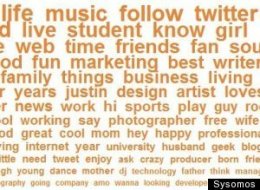
It grew by over 100 million users, more than doubled its staff, raised new funding, and launched numerous features and advertising products aimed to turn the growing social media site into a money-maker.
Sysomos, a provider of social media analytics tools, did some number crunching to present a look at how Twitter has changed in the last year.
Their data tells a story of growth across multiple frontiers. There are more of us tweeting, we're both following and being followed more, and we're sharing more about ourselves.
A few highlights from Sysomos' report:
- 82% of Twitter users now provide a name, compared with 33% in 2009.The vast majority of Tweeters (95.9%) have 500 followers or fewer, with just .06% boasting over 10,000 followers and 2.12% of users attracting over 1,000 followers.
- 73% provide location information compared with 44% in 2009.
- 63.3% now provide a bio, compared with 31% in 2009.
- Users with more than 100 friends has increased by three-fold to 21% since 2009.
- 80% users have made fewer than 500 tweets.
Sysomos' survey confirms what many other Twitter studies have found: a very small group of users account for the lion's share of the activity on the microblogging site. Nearly 60% of tweets come from 2.2% of Twitter's users, with 22.5% making up a full 90% of Twitter's activity.
What do we share about ourselves in our Twitter bios? See the word clouds generated by Sysomos below, then take a look at out our post on what people retweet and why.
LOOK:


5:48 PM 0
Twitter Raises $200 Million
Kleiner Perkins Caufield & Byers, one of Silicon Valley's best-known venture capital firms, is leading the investment announced Wednesday. The funding values privately held Twitter at $3.7 billion, up from $1 billion when the 3-year-old company raised its last round of financing 15 months ago.
The funding was first reported by the technology blog, All Things Digital.
Besides bringing in more money, Twitter also added two members to its board, veteran Internet entrepreneurs Mike McCue and David Rosenblatt.
McCue sold a voice recognition company to Microsoft Corp. for $800 million in 2007, and Rosenblatt was CEO of online ad service DoubleClick when Google Inc. bought it for $3.2 billion in 2008.
3:40 PM 0
Could Social Media Replace Some Books?

Some might argue that taken collectively, social media and the Internet in general can tell the whole story — the whole truth, so to speak. But it’s important to remember that while that may be true of the moment — the immediate present — it isn’t necessarily so of the truth as it exists in the future, when time itself serves a different context and people, even those who lived through the events in question, are likely to view and think about them differently than they did as they were happening. It is the reason every generation of historians revisit the key moments in our history and manage to come up with something different to say. The same goes for biographers and historical personages.

Tell us what you think about in the comments below.
11:25 AM 0
Subscribe to:
Posts (Atom)
